
0 reactions
What are you saying?
To anyone?
To yourself?
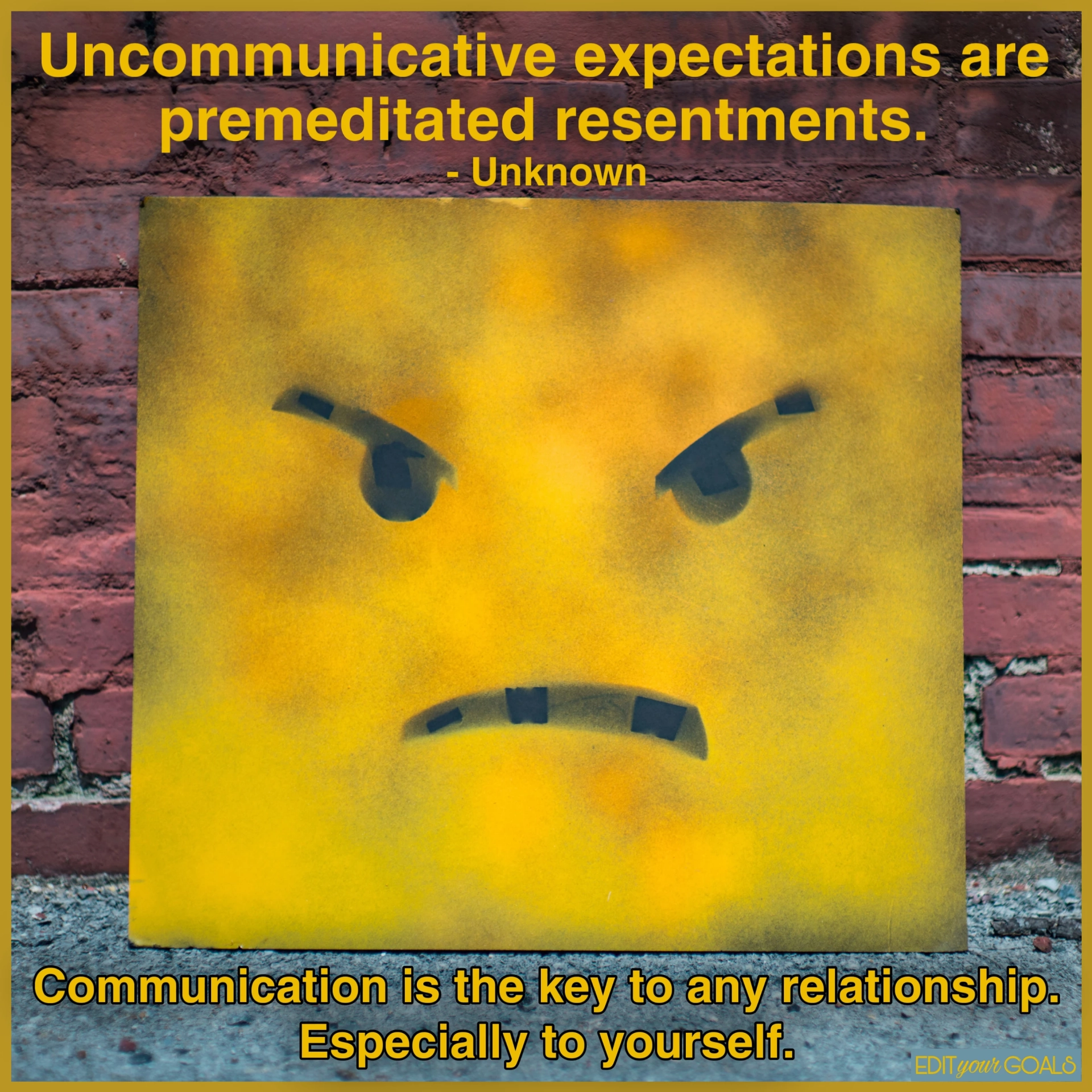
In any relationship, communication acts as the cornerstone of understanding and connection. The absence of communication can be a breeding ground for disappointment and resentment. When we fail to communicate, we leave our partners in the dark about our expectations, needs, and feelings. This lack of clarity can lead to misunderstandings and unmet expectations, setting the stage for disappointment.
Resentment often follows when one person unknowingly falls short of an unspoken standard or agreement. Without open dialogue, there is no opportunity for negotiation or compromise. Each partner might assume the other understands their needs and expectations, leading to frustration when these unvoiced desires are not met. Over time, this unaddressed frustration can fester, turning into deep-seated resentment.
Effective communication allows both parties to express their needs and work towards mutual agreements. It provides a platform for honest discussions, where both individuals can voice their expectations and negotiate terms that are acceptable to both. When agreements are openly discussed and made, they can be honored with integrity. If circumstances change or agreements are not upheld, open communication allows for renegotiation, preventing the buildup of negative emotions.
Conversely, in the absence of communication, we are likely to internalize our disappointment and let it grow into resentment. This is particularly true when the other party is unaware of the expectations they are failing to meet. Thus, fostering an environment of open, honest communication is crucial. It not only prevents misunderstandings but also ensures that both parties feel heard, respected, and valued, laying a foundation for a healthier, more resilient relationship. Even with yourself.
-Coach Mike
EDIT your GOALS
Every
Day
Internal
Thoughts
Guarantees
Our
Absolute
Life
Situations
#communication #agreement #expectations #resentment #relationships
Background Picture by
Andre Hunter
To anyone?
To yourself?
In any relationship, communication acts as the cornerstone of understanding and connection. The absence of communication can be a breeding ground for disappointment and resentment. When we fail to communicate, we leave our partners in the dark about our expectations, needs, and feelings. This lack of clarity can lead to misunderstandings and unmet expectations, setting the stage for disappointment.
Resentment often follows when one person unknowingly falls short of an unspoken standard or agreement. Without open dialogue, there is no opportunity for negotiation or compromise. Each partner might assume the other understands their needs and expectations, leading to frustration when these unvoiced desires are not met. Over time, this unaddressed frustration can fester, turning into deep-seated resentment.
Effective communication allows both parties to express their needs and work towards mutual agreements. It provides a platform for honest discussions, where both individuals can voice their expectations and negotiate terms that are acceptable to both. When agreements are openly discussed and made, they can be honored with integrity. If circumstances change or agreements are not upheld, open communication allows for renegotiation, preventing the buildup of negative emotions.
Conversely, in the absence of communication, we are likely to internalize our disappointment and let it grow into resentment. This is particularly true when the other party is unaware of the expectations they are failing to meet. Thus, fostering an environment of open, honest communication is crucial. It not only prevents misunderstandings but also ensures that both parties feel heard, respected, and valued, laying a foundation for a healthier, more resilient relationship. Even with yourself.
-Coach Mike
EDIT your GOALS
Every
Day
Internal
Thoughts
Guarantees
Our
Absolute
Life
Situations
#communication #agreement #expectations #resentment #relationships
Background Picture by
Andre Hunter


3 reactions
Why are you resentful ?
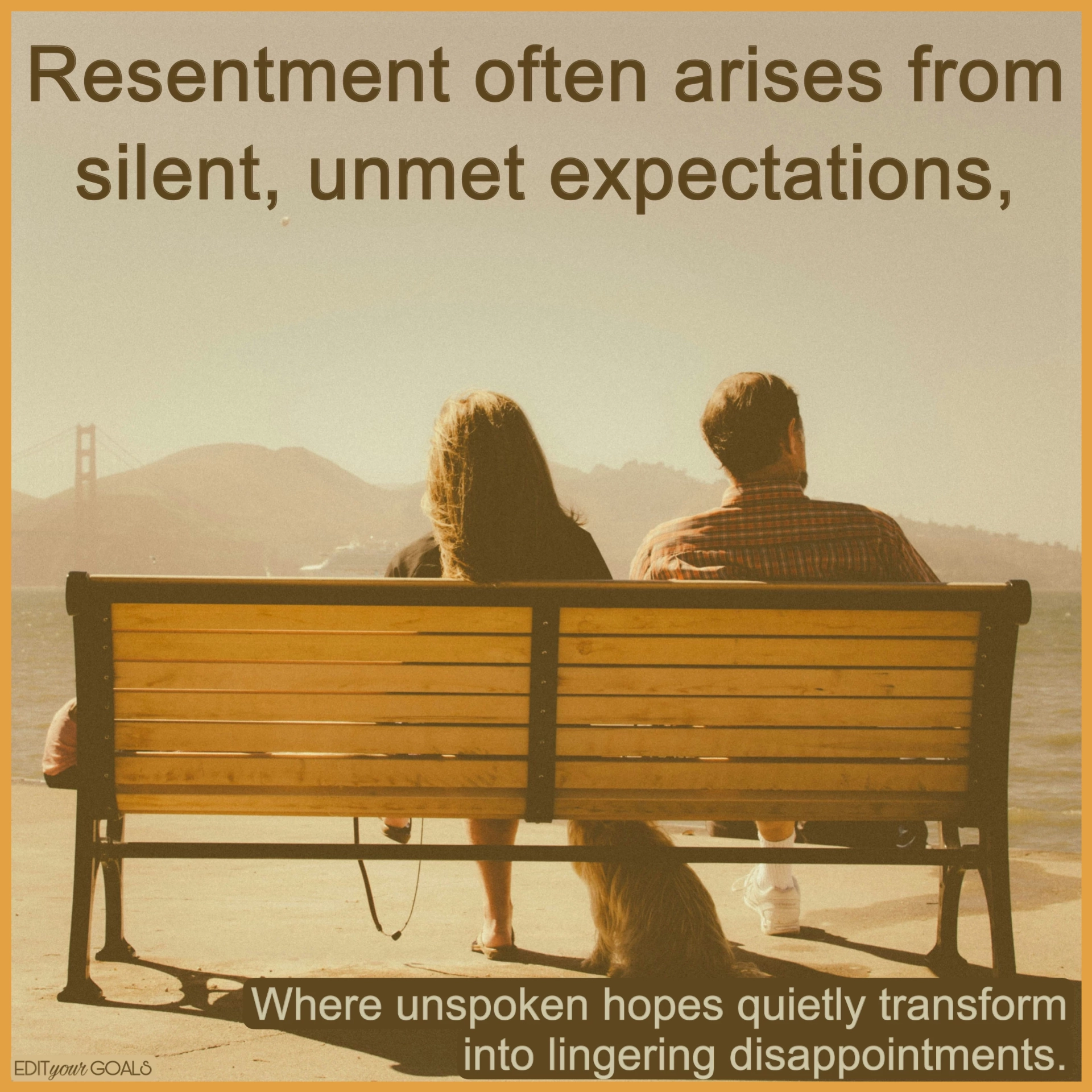
When our expectations are not met, it is easy to produce feelings of resentment. We often set expectations based on our own perceptions, desires, and understanding of situations or people. However, these expectations are not always aligned with the reality or capabilities of the other person, which can lead to disappointment and resentment when they fail to meet these expectations.
In many cases, this resentment arises due to a lack of communication or understanding. We assume that the other party knows and understands our expectations, and when they don’t, we feel let down or betrayed.
To mitigate this, we can shift from forming expectations to forming agreements. Agreements are born out of open conversations where both parties can express their needs, concerns, and capabilities. These agreements create a mutual understanding and shared responsibility, making both parties accountable for their part.
Forming agreements rather than expectations can eliminate the element of disappointment, as both parties are aware and in agreement about what is expected of them. This transparency fosters more trust and understanding, reducing the potential for resentment.
Despite this, not all agreements will be seamlessly met. People may falter, situations may change, and conflicts may arise. However, having an agreement in place provides a clearer path to resolution and understanding. It presents an opportunity to discuss, reassess, and realign the agreement based on the new circumstances.
Whether it is in a romantic, professional, or any other type of relationship, forming agreements can help reduce the chances of resentment, promoting healthier and more balanced relationships.
Time to let go of expectations and start having open conversations to make agreements the grow responsibly and accountability.
-Coach Mike
EDIT your GOALS
Every
Day
Internal
Thoughts
Guarantees
Our
Absolute
Life
Situations
#resentment #disapointment #expectations #life #agree
Background Picture by
Charlie Foster
When our expectations are not met, it is easy to produce feelings of resentment. We often set expectations based on our own perceptions, desires, and understanding of situations or people. However, these expectations are not always aligned with the reality or capabilities of the other person, which can lead to disappointment and resentment when they fail to meet these expectations.
In many cases, this resentment arises due to a lack of communication or understanding. We assume that the other party knows and understands our expectations, and when they don’t, we feel let down or betrayed.
To mitigate this, we can shift from forming expectations to forming agreements. Agreements are born out of open conversations where both parties can express their needs, concerns, and capabilities. These agreements create a mutual understanding and shared responsibility, making both parties accountable for their part.
Forming agreements rather than expectations can eliminate the element of disappointment, as both parties are aware and in agreement about what is expected of them. This transparency fosters more trust and understanding, reducing the potential for resentment.
Despite this, not all agreements will be seamlessly met. People may falter, situations may change, and conflicts may arise. However, having an agreement in place provides a clearer path to resolution and understanding. It presents an opportunity to discuss, reassess, and realign the agreement based on the new circumstances.
Whether it is in a romantic, professional, or any other type of relationship, forming agreements can help reduce the chances of resentment, promoting healthier and more balanced relationships.
Time to let go of expectations and start having open conversations to make agreements the grow responsibly and accountability.
-Coach Mike
EDIT your GOALS
Every
Day
Internal
Thoughts
Guarantees
Our
Absolute
Life
Situations
#resentment #disapointment #expectations #life #agree
Background Picture by
Charlie Foster

1

1

1