8 reactions
Y(sInternational Chopin Competition: Preliminary round, seventh day. What's your opinion?
#First session:
##ERIC GUO (steinway): info https://chopincompetition.pl/en/competitors/685
He was a contestant in the 18th Chopin Competition. He began with Nocturne Op. 62 No. 1. If you follow a pianist’s development, you can compare his two renditions of this piece: for example, notice how his musicality and use of rubato have improved. The 2021 performance felt somewhat mechanical, whereas his current interpretation is fully realized. He delivered exquisite trills and concluded with a remarkable ending. Next, his Étude Op. 10 No. 1 was cleanly executed; he managed the piece wonderfully. His Étude Op. 25 No. 6 was impressive overall, phrasing was appropriate, though the thirds occasionally sounded disorganized. His Mazurka sparkled, with the inner voices beautifully highlighted and tasteful rubato throughout. Despite a few mistakes, his Scherzo Op. 31 was an incredible rendition: he sustained a lyrical line in the left hand and produced clear, singing trills in the right.
##YUBO DENG (yamaha): info https://chopincompetition.pl/en/competitors/675
He opened with Op. 25 No. 7 as a Nocturne. We can hear his maturity in making smart interpretative choices, for instance, he slows the chromatic figures in the left hand to enhance the piece rather than merely execute the scale. In Étude Op. 25 No. 10, he balanced the octaves and melodic line, and his middle section was beautifully lyrical, with excellent control of the inner voices. He has the rare ability to balance both hands, demonstrated again in Op. 25 No. 11, where he maintained both the principal voice and the right-hand melody. I admired the dynamics in Mazurka Op. 30 No. 4, his staccatos were crisp, and he constructed a coherent overall structure. He concluded with Scherzo Op. 39: his octaves were outstanding, the middle section featured crystalline, pearly tones, and the coda was astonishingly controlled.
##KIRON ATOM TELLIAN (Steinway): info https://chopincompetition.pl/en/competitors/777
He opened with Nocturne Op. 62 No. 1, employing somewhat exaggerated phrasing, which nonetheless proved interesting. His performance displayed a wide dynamic range, you could hear the pianissimo at the end of the trills section. His Mazurka retained his personal style and rubato, played with strong lyricism and insightful dance idioms, though the tempo was a bit irregular. He showed tremendous creativity in his rubato during Op. 25 No. 11, but I missed a cohesive structure, and his left hand felt heavy. Nonetheless, his unique rubato makes me want to revisit this performance. He then tackled Étude Op. 25 No. 6, but many of the thirds were lost. I liked his tone, but this étude didn’t quite work. He recovered well and continued with Scherzo Op. 54, which sparkled despite some dramatic tempo fluctuations. I will seek out more of his performances, , his pianistic personality is captivating. I would love to hear him on period instruments (I hope that he compete on Chopin competition of period instruments)
##RIKAKO TSUJIMOTO (steinway): info https://chopincompetition.pl/en/competitors/783
She began with Mazurka Op. 56 No. 3. Her phrasing was interesting, though I felt some passages were over-pedaled. Next, her Étude Op. 25 No. 5 had a strong start; while I didn’t hear many inner voices, the middle section was solid, and she emphasized the main melody effectively. Her performance of Op. 10 No. 4 was passionate and beautifully nuanced, with stable tempo and minimal rubato. She chose a brisk tempo for Nocturne Op. 27 No. 1, she is clearly a musical pianist, but I found some transitional themes (especially the triumphant C-sharp-major section) awkward. Her articulation between phrases felt somewhat clipped, and there were a few minor lapses of focus.
##break
##CHUN LAM U (Steinway): info https://chopincompetition.pl/en/competitors/784
He began with Nocturne Op. 48 No. 1. His rendition was very musical, showing mature interpretative taste, you could hear his transitions into the doppio and the final phrases clearly. His Étude Op. 10 No. 4 was cleanly played; although not all inner voices emerged, the tempo was enjoyable and the structure coherent. He concluded with some demanding phrases, executed with a slightly neglected touch. His Étude Op. 25 No. 4 was notable for the right hand’s impressive dynamics, alternating staccato and legato in all the correct places. His Mazurka had great dynamic contrast, though I didn’t care for his rubato. His Scherzo Op. 39 was clean and maintained a pleasant, steady tempo rather than serving as a virtuosic showpiece.
##LIYA WANG (yamaha): info https://chopincompetition.pl/en/competitors/787
She began with Nocturne Op. 62 No. 1. I admired her singing tone, though she played the trills section faster than usual. Her phrasing remained coherent throughout. In Étude Op. 10 No. 4, at a rather brisk tempo, she achieved a beautiful legato in a voice at a time of the etude in her right-hand voice, unusual in this étude and well worth a second listen. Her Étude Op. 25 No. 4 was outstanding: she combined deep legato and a clear inner voice in the right hand, whereas this étude is often played staccato. Her tempo choice highlighted her voicing beautifully. Her Mazurka was perfectly danced and artfully phrased, and in Scherzo Op. 54 she let the melody flow while allowing each inner voice to breathe. The middle section was slightly hurried, but she mastered it and delivered a spectacular coda.
##QUANLIN WANG (yamaha): info https://chopincompetition.pl/en/competitors/786
She began with a Mazurka that felt somewhat static, uniform rather than dynamically engaging. In Étude Op. 10 No. 4 she was clean and steady; her touch was transparent. She maintained the same steady tempo in Op. 10 No. 10, though the tone was a bit thin; she made a noticeable error at the end of the étude but recovered quickly. Her Nocturne was pleasant, mostly pianissimo, which suggested a limited dynamic range. In the middle section of Scherzo Op. 39 she produced a lovely singing tone, though her overall approach felt metronomic.
#Second ession:
##RYAN WANG (yamaha): info https://chopincompetition.pl/en/competitors/789
He used expressive rubato in Nocturne Op. 62 No. 1, choosing tempo carefully throughout, including the nuanced trills. His Mazurka Op. 59 No. 3 felt a bit mechanical, surprising given a previous performance rich in color, but even without rubato, it was a solid interpretation. He made a small slip in Étude Op. 10 No. 10 but recovered swiftly; the piece upheld a coherent structure and showcased a wide tonal palette. His Étude Op. 10 No. 5 was clean with stable tempo, and I admired his tempo choice. His Scherzo was simply perfect. At just 17, he demonstrates enormous musical maturity, you only need to hear his transition into the coda to be convinced.
##YUHANG WANG (steinway): info https://chopincompetition.pl/en/competitors/788
He took a slow approach to Étude Op. 10 No. 1, yet played it with astonishing clarity and complete control. His Op. 10 No. 2 was equally impressive, more transparent than other contestants in the preliminary round, and the left-hand voices were perfectly articulated. His Nocturne Op. 27 No. 2 featured a grand, leisurely tempo and substantial musicality, no unnecessary fireworks. Mid-program, he abruptly cut off the Mazurka and the audience applauded in concern. He will play on May first at 13.30 polish time). I recomend to listen him because he played one of the best etudes Op. 10 No. 1 of the entire preliminary round. All our support for him!
##ZITONG WANG (steinway): info : [info](https://chopincompetition.pl/en/competitors/785
A participant in the 18th Chopin Competition, she began with Mazurka Op. 50 No. 1, great rubato and tempo, though her touch occasionally felt rough. Her Étude Op. 10 No. 7 was cohesive and solid; I liked her voicing. Op. 10 No. 5 was cleanly balanced, with an emphasized principal voice. Her Nocturne Op. 48 No. 2 was lyrical and unforced, with constant tempo and outstanding dynamics. Her Scherzo Op. 20 was clear and precise: the left-hand voice was mesmerizing, the middle section song-like, and the coda dramatic yet controlled.
##JAN WIDLARZ (steinway): info https://chopincompetition.pl/en/competitors/790
He opened with Nocturne Op. 48 No. 1; his phrasing established a coherent structure, from the crescendo to the doppio and through the inner voices of the arpeggios. In Étude Op. 10 No. 12, his pedaling was unconventional but his left-hand dynamics were interesting. He balanced both hands well. In Op. 25 No. 10, his octaves were slightly over-pedaled, but the middle section remained fast and lyrical. His Mazurka articulation and phrasing were excellent, though occasionally overshadowed by the pedal. His Scherzo was brighter and cleaner than his earlier pieces.
##break
##KWAN CHAI WONG (steinway): info https://chopincompetition.pl/en/competitors/793
He began with Nocturne Op. 62 No. 1 at a brisk tempo with somewhat disjointed phrasing, yet his right hand still sang. The trills were approached almost like an étude, and he finished the nocturne quickly. In Étude Op. 10 No. 10, he played briskly but sacrificed some musicality and dynamics, though he did control the technical demands. In Op. 10 No. 4, he maintained that speed, offering a clean, controlled melodic line. His Mazurka felt like a fast dance, slowing only at the end. He concluded with Scherzo Op. 39: those are possibly the fastest octaves in the preliminary round, nuances were lost, but the technical command was unmistakable.
#SZE UEN WONG (steinway): info https://chopincompetition.pl/en/competitors/792
He opened with Nocturne Op. 55 No. 2, a dialogue among two or three voices, each beautifully delineated. His dynamic range was wide. His Étude Op. 10 No. 8 was clean with light touch and restrained rubato, giving it solidity. Op. 10 No. 11 featured amazing arpeggios and a conversational interplay between inner voice and main melody. His Mazurka had appropriate tempo and rubato, with smooth transitions that many pianists struggle to execute. Scherzo Op. 54 began brilliantly, clean phrasing, though the middle section was slightly compromised by speed. I enjoyed the inner voices in the recapitulation and his wonderful coda.
##VICTORIA WONG (yamaha): info https://chopincompetition.pl/en/competitors/791
She began with Nocturne Op. 27 No. 1. I really enjoyed her rendition, there was a wide dynamic range and well-executed nuances. Her Étude Op. 25 No. 5 was very strong: she maintained a steady tempo and brought out the inner voices clearly in both the opening theme and closing section. Her Étude Op. 10 No. 8 was crisp and clean, with a bright, sparkling touch throughout. The Mazurka was somewhat contrasting, dynamics felt slightly exaggerated, but she preserved the characteristic mazurka rhythm and chose an effective tempo. She finished with Scherzo Op. 54, exceptionally polished and delightful. Always right on the beat, she gave a traditional yet engaging interpretation of the middle section and wrapped up with a perfectly executed coda.
#music #audio
source
#First session:
##ERIC GUO (steinway): info https://chopincompetition.pl/en/competitors/685
He was a contestant in the 18th Chopin Competition. He began with Nocturne Op. 62 No. 1. If you follow a pianist’s development, you can compare his two renditions of this piece: for example, notice how his musicality and use of rubato have improved. The 2021 performance felt somewhat mechanical, whereas his current interpretation is fully realized. He delivered exquisite trills and concluded with a remarkable ending. Next, his Étude Op. 10 No. 1 was cleanly executed; he managed the piece wonderfully. His Étude Op. 25 No. 6 was impressive overall, phrasing was appropriate, though the thirds occasionally sounded disorganized. His Mazurka sparkled, with the inner voices beautifully highlighted and tasteful rubato throughout. Despite a few mistakes, his Scherzo Op. 31 was an incredible rendition: he sustained a lyrical line in the left hand and produced clear, singing trills in the right.
##YUBO DENG (yamaha): info https://chopincompetition.pl/en/competitors/675
He opened with Op. 25 No. 7 as a Nocturne. We can hear his maturity in making smart interpretative choices, for instance, he slows the chromatic figures in the left hand to enhance the piece rather than merely execute the scale. In Étude Op. 25 No. 10, he balanced the octaves and melodic line, and his middle section was beautifully lyrical, with excellent control of the inner voices. He has the rare ability to balance both hands, demonstrated again in Op. 25 No. 11, where he maintained both the principal voice and the right-hand melody. I admired the dynamics in Mazurka Op. 30 No. 4, his staccatos were crisp, and he constructed a coherent overall structure. He concluded with Scherzo Op. 39: his octaves were outstanding, the middle section featured crystalline, pearly tones, and the coda was astonishingly controlled.
##KIRON ATOM TELLIAN (Steinway): info https://chopincompetition.pl/en/competitors/777
He opened with Nocturne Op. 62 No. 1, employing somewhat exaggerated phrasing, which nonetheless proved interesting. His performance displayed a wide dynamic range, you could hear the pianissimo at the end of the trills section. His Mazurka retained his personal style and rubato, played with strong lyricism and insightful dance idioms, though the tempo was a bit irregular. He showed tremendous creativity in his rubato during Op. 25 No. 11, but I missed a cohesive structure, and his left hand felt heavy. Nonetheless, his unique rubato makes me want to revisit this performance. He then tackled Étude Op. 25 No. 6, but many of the thirds were lost. I liked his tone, but this étude didn’t quite work. He recovered well and continued with Scherzo Op. 54, which sparkled despite some dramatic tempo fluctuations. I will seek out more of his performances, , his pianistic personality is captivating. I would love to hear him on period instruments (I hope that he compete on Chopin competition of period instruments)
##RIKAKO TSUJIMOTO (steinway): info https://chopincompetition.pl/en/competitors/783
She began with Mazurka Op. 56 No. 3. Her phrasing was interesting, though I felt some passages were over-pedaled. Next, her Étude Op. 25 No. 5 had a strong start; while I didn’t hear many inner voices, the middle section was solid, and she emphasized the main melody effectively. Her performance of Op. 10 No. 4 was passionate and beautifully nuanced, with stable tempo and minimal rubato. She chose a brisk tempo for Nocturne Op. 27 No. 1, she is clearly a musical pianist, but I found some transitional themes (especially the triumphant C-sharp-major section) awkward. Her articulation between phrases felt somewhat clipped, and there were a few minor lapses of focus.
##break
##CHUN LAM U (Steinway): info https://chopincompetition.pl/en/competitors/784
He began with Nocturne Op. 48 No. 1. His rendition was very musical, showing mature interpretative taste, you could hear his transitions into the doppio and the final phrases clearly. His Étude Op. 10 No. 4 was cleanly played; although not all inner voices emerged, the tempo was enjoyable and the structure coherent. He concluded with some demanding phrases, executed with a slightly neglected touch. His Étude Op. 25 No. 4 was notable for the right hand’s impressive dynamics, alternating staccato and legato in all the correct places. His Mazurka had great dynamic contrast, though I didn’t care for his rubato. His Scherzo Op. 39 was clean and maintained a pleasant, steady tempo rather than serving as a virtuosic showpiece.
##LIYA WANG (yamaha): info https://chopincompetition.pl/en/competitors/787
She began with Nocturne Op. 62 No. 1. I admired her singing tone, though she played the trills section faster than usual. Her phrasing remained coherent throughout. In Étude Op. 10 No. 4, at a rather brisk tempo, she achieved a beautiful legato in a voice at a time of the etude in her right-hand voice, unusual in this étude and well worth a second listen. Her Étude Op. 25 No. 4 was outstanding: she combined deep legato and a clear inner voice in the right hand, whereas this étude is often played staccato. Her tempo choice highlighted her voicing beautifully. Her Mazurka was perfectly danced and artfully phrased, and in Scherzo Op. 54 she let the melody flow while allowing each inner voice to breathe. The middle section was slightly hurried, but she mastered it and delivered a spectacular coda.
##QUANLIN WANG (yamaha): info https://chopincompetition.pl/en/competitors/786
She began with a Mazurka that felt somewhat static, uniform rather than dynamically engaging. In Étude Op. 10 No. 4 she was clean and steady; her touch was transparent. She maintained the same steady tempo in Op. 10 No. 10, though the tone was a bit thin; she made a noticeable error at the end of the étude but recovered quickly. Her Nocturne was pleasant, mostly pianissimo, which suggested a limited dynamic range. In the middle section of Scherzo Op. 39 she produced a lovely singing tone, though her overall approach felt metronomic.
#Second ession:
##RYAN WANG (yamaha): info https://chopincompetition.pl/en/competitors/789
He used expressive rubato in Nocturne Op. 62 No. 1, choosing tempo carefully throughout, including the nuanced trills. His Mazurka Op. 59 No. 3 felt a bit mechanical, surprising given a previous performance rich in color, but even without rubato, it was a solid interpretation. He made a small slip in Étude Op. 10 No. 10 but recovered swiftly; the piece upheld a coherent structure and showcased a wide tonal palette. His Étude Op. 10 No. 5 was clean with stable tempo, and I admired his tempo choice. His Scherzo was simply perfect. At just 17, he demonstrates enormous musical maturity, you only need to hear his transition into the coda to be convinced.
##YUHANG WANG (steinway): info https://chopincompetition.pl/en/competitors/788
He took a slow approach to Étude Op. 10 No. 1, yet played it with astonishing clarity and complete control. His Op. 10 No. 2 was equally impressive, more transparent than other contestants in the preliminary round, and the left-hand voices were perfectly articulated. His Nocturne Op. 27 No. 2 featured a grand, leisurely tempo and substantial musicality, no unnecessary fireworks. Mid-program, he abruptly cut off the Mazurka and the audience applauded in concern. He will play on May first at 13.30 polish time). I recomend to listen him because he played one of the best etudes Op. 10 No. 1 of the entire preliminary round. All our support for him!
##ZITONG WANG (steinway): info : [info](https://chopincompetition.pl/en/competitors/785
A participant in the 18th Chopin Competition, she began with Mazurka Op. 50 No. 1, great rubato and tempo, though her touch occasionally felt rough. Her Étude Op. 10 No. 7 was cohesive and solid; I liked her voicing. Op. 10 No. 5 was cleanly balanced, with an emphasized principal voice. Her Nocturne Op. 48 No. 2 was lyrical and unforced, with constant tempo and outstanding dynamics. Her Scherzo Op. 20 was clear and precise: the left-hand voice was mesmerizing, the middle section song-like, and the coda dramatic yet controlled.
##JAN WIDLARZ (steinway): info https://chopincompetition.pl/en/competitors/790
He opened with Nocturne Op. 48 No. 1; his phrasing established a coherent structure, from the crescendo to the doppio and through the inner voices of the arpeggios. In Étude Op. 10 No. 12, his pedaling was unconventional but his left-hand dynamics were interesting. He balanced both hands well. In Op. 25 No. 10, his octaves were slightly over-pedaled, but the middle section remained fast and lyrical. His Mazurka articulation and phrasing were excellent, though occasionally overshadowed by the pedal. His Scherzo was brighter and cleaner than his earlier pieces.
##break
##KWAN CHAI WONG (steinway): info https://chopincompetition.pl/en/competitors/793
He began with Nocturne Op. 62 No. 1 at a brisk tempo with somewhat disjointed phrasing, yet his right hand still sang. The trills were approached almost like an étude, and he finished the nocturne quickly. In Étude Op. 10 No. 10, he played briskly but sacrificed some musicality and dynamics, though he did control the technical demands. In Op. 10 No. 4, he maintained that speed, offering a clean, controlled melodic line. His Mazurka felt like a fast dance, slowing only at the end. He concluded with Scherzo Op. 39: those are possibly the fastest octaves in the preliminary round, nuances were lost, but the technical command was unmistakable.
#SZE UEN WONG (steinway): info https://chopincompetition.pl/en/competitors/792
He opened with Nocturne Op. 55 No. 2, a dialogue among two or three voices, each beautifully delineated. His dynamic range was wide. His Étude Op. 10 No. 8 was clean with light touch and restrained rubato, giving it solidity. Op. 10 No. 11 featured amazing arpeggios and a conversational interplay between inner voice and main melody. His Mazurka had appropriate tempo and rubato, with smooth transitions that many pianists struggle to execute. Scherzo Op. 54 began brilliantly, clean phrasing, though the middle section was slightly compromised by speed. I enjoyed the inner voices in the recapitulation and his wonderful coda.
##VICTORIA WONG (yamaha): info https://chopincompetition.pl/en/competitors/791
She began with Nocturne Op. 27 No. 1. I really enjoyed her rendition, there was a wide dynamic range and well-executed nuances. Her Étude Op. 25 No. 5 was very strong: she maintained a steady tempo and brought out the inner voices clearly in both the opening theme and closing section. Her Étude Op. 10 No. 8 was crisp and clean, with a bright, sparkling touch throughout. The Mazurka was somewhat contrasting, dynamics felt slightly exaggerated, but she preserved the characteristic mazurka rhythm and chose an effective tempo. She finished with Scherzo Op. 54, exceptionally polished and delightful. Always right on the beat, she gave a traditional yet engaging interpretation of the middle section and wrapped up with a perfectly executed coda.
#music #audio
source


3

2

2

1

0 reactions
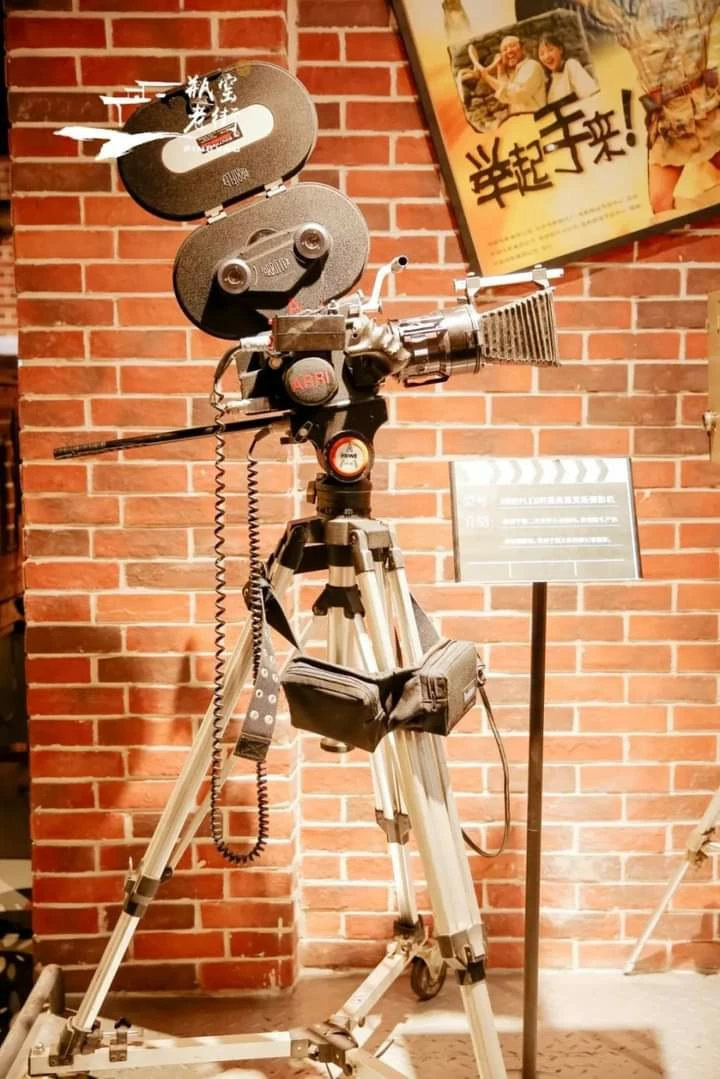
The Vintage Film Exhibition Hall📽️🎞️ in #Yuhang , #Hangzhou , has been rated as a provincial rural museum in Zhejiang. Nestled in Pingyao Old Street, it houses a diverse collection of antique movie projectors, gramophones, cameras, and rare movie posters — a must-visit for cinephiles. #YuhangCulture