#FinancialAnchor g/confessions g/studio #earn activity 1…

2 reactions
#FinancialAnchor
#earn activity
1. Financial Safety Net 💰
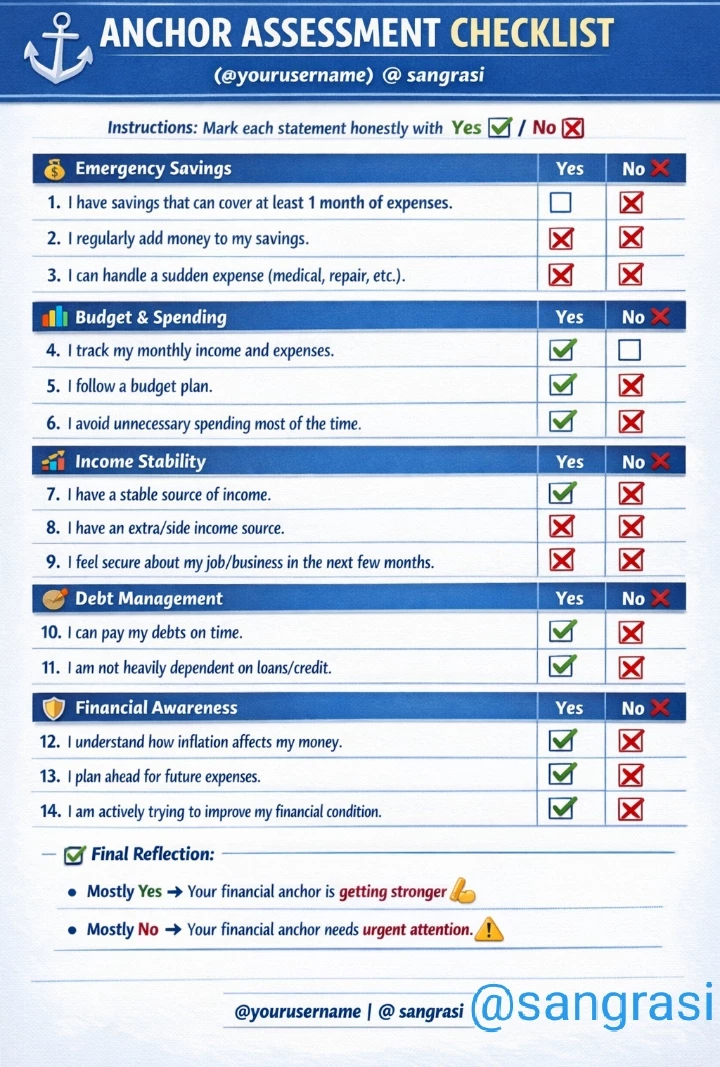
If something bad happens tomorrow, honestly it would be difficult to manage for a full month without income.
Many people today, including me, don’t have a very strong financial safety net.
Prices are high, savings are low, and income often just covers monthly expenses.
Even if there are some savings, they may only last a short time.
👉 Conclusion:
No, the safety net is not strong enough. It needs improvement, especially in today’s uncertain economy.
2. Inflation Snapshot 📈
Recently, the most shocking expense was grocery items like flour, oil, and milk. Prices increased suddenly and a normal shopping trip became much more expensive.
👉 How I am managing:
Buying fewer unnecessary items
Choosing cheaper alternatives
Trying to save small amounts
👉 Struggles:
Income is the same, but expenses are rising
Hard to save money
👉 Resources helping / missing:
Helping: Small budgeting and family support
Missing: Extra income sources and proper savings plan
👉 One lesson learned:
Always save money for emergencies because prices can rise anytime without warning.
3. Anchor Blueprint (SMART Plan) 🎯
👉 Goal: Build a small emergency fund
👉 Action Plan:
I will save 10% of my monthly income
I will track all my expenses daily
I will reduce one extra expense (like eating out or online shopping)
👉 Time-bound:
I will follow this plan for the next 30 days
👉 Expected Result:
At the end of the month, I will have some savings started and better control over my spending.
#earn activity
1. Financial Safety Net 💰
If something bad happens tomorrow, honestly it would be difficult to manage for a full month without income.
Many people today, including me, don’t have a very strong financial safety net.
Prices are high, savings are low, and income often just covers monthly expenses.
Even if there are some savings, they may only last a short time.
👉 Conclusion:
No, the safety net is not strong enough. It needs improvement, especially in today’s uncertain economy.
2. Inflation Snapshot 📈
Recently, the most shocking expense was grocery items like flour, oil, and milk. Prices increased suddenly and a normal shopping trip became much more expensive.
👉 How I am managing:
Buying fewer unnecessary items
Choosing cheaper alternatives
Trying to save small amounts
👉 Struggles:
Income is the same, but expenses are rising
Hard to save money
👉 Resources helping / missing:
Helping: Small budgeting and family support
Missing: Extra income sources and proper savings plan
👉 One lesson learned:
Always save money for emergencies because prices can rise anytime without warning.
3. Anchor Blueprint (SMART Plan) 🎯
👉 Goal: Build a small emergency fund
👉 Action Plan:
I will save 10% of my monthly income
I will track all my expenses daily
I will reduce one extra expense (like eating out or online shopping)
👉 Time-bound:
I will follow this plan for the next 30 days
👉 Expected Result:
At the end of the month, I will have some savings started and better control over my spending.


1

1
| 6,000 mlx | |
| 14 | |
| 2 |