#PoliticalSundayXV @waterandfire08 g/politicalmind…

18 reactions
#PoliticalSundayXV
1. Is
✅ Yes , his demand is tenable .
Explanation :
Under the rule of warranty, if a product is found unserviceable or damaged upon receipt , the buyer has the right to refund or return . In this case, although the popcorn looked okay at first, its core function—to pop when cooked —failed. Since it did not perform its expected purpose , the product is considered defective or unserviceable . Therefore,
2. Will you follow
❌ No , I would not follow
Simple Understanding :
Just because food can be affected by weather doesn’t mean we should just accept a product that doesn’t work . If I bought something, I expect it to work as promised . If it doesn’t, then I have every right to raise the issue .
3. If you were
✅ Yes , I would refund or replace the popcorn.
Explanation :
As a responsible seller, I would acknowledge the customer’s complaint. The popcorn failed its purpose, so it's a defective product , even if it's due to temperature or shipping conditions. A refund or replacement would show that I value customer satisfaction and stand by the quality of my products. Also, it builds trust and encourages repeat business. Refusing might save money once, but harms reputation long-term.
4. Who should be responsible for
⚠️
Why?
So, the blame cannot fall on
5. What is the best remedy to prevent this kind of damage?
✔️ Proper communication, labeling, and checking of products.
Sellers should ensure clear instructions and expiration dates are visible.
Buyers and gift-givers must check products before using or passing them on.
If giving food as a gift, always mention storage conditions and expiry clearly .
For sellers, maintaining quality during delivery—especially for food—is essential.
Always read labels and act responsibly when consuming or gifting edible products.
6. Moral Lesson of the Story
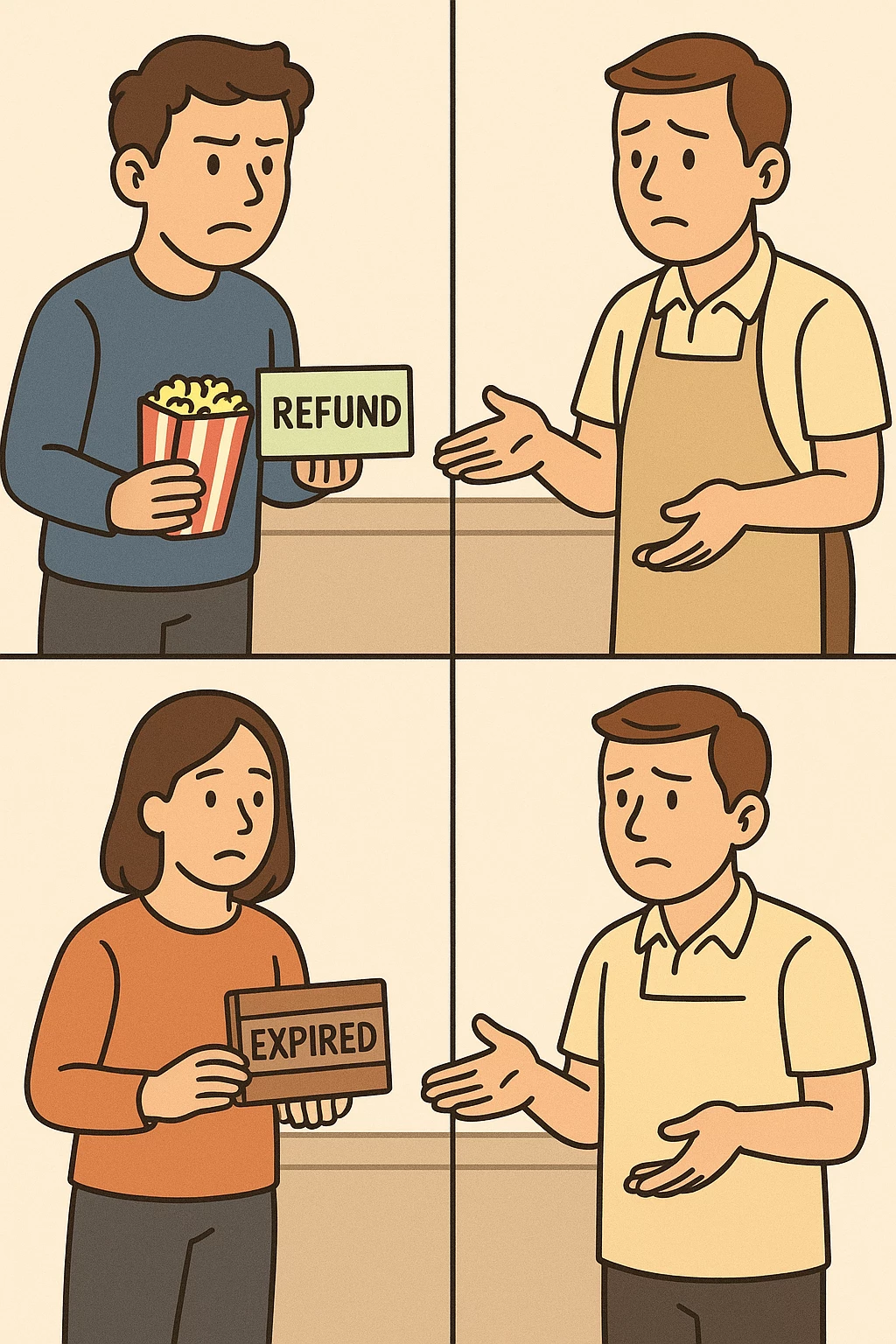
These scenes teach us that responsibility doesn't end with buying or giving something —it extends to how we use, store, and share it. In Scene 1, we learn that even small products like popcorn come with an expectation of functionality . As consumers, we are right to demand quality, and as sellers, we must take accountability for what we sell.
In Scene 2, the damage wasn’t caused by the product itself, but by negligence . This shows that even with good intentions, like giving a gift, lack of attention to detail —such as expiration dates—can harm others. It’s a reminder that we must be careful and responsible , especially with food items.
Ultimately, the stories highlight the value of clear communication, product care, and personal accountability . Whether you're a buyer, seller, or a friend, what you give or sell carries a responsibility. Think before you act, and always choose to do the right thing , even in small matters.
1. Is
✅ Yes , his demand is tenable .
Explanation :
Under the rule of warranty, if a product is found unserviceable or damaged upon receipt , the buyer has the right to refund or return . In this case, although the popcorn looked okay at first, its core function—to pop when cooked —failed. Since it did not perform its expected purpose , the product is considered defective or unserviceable . Therefore,
2. Will you follow
❌ No , I would not follow
Simple Understanding :
Just because food can be affected by weather doesn’t mean we should just accept a product that doesn’t work . If I bought something, I expect it to work as promised . If it doesn’t, then I have every right to raise the issue .
3. If you were
✅ Yes , I would refund or replace the popcorn.
Explanation :
As a responsible seller, I would acknowledge the customer’s complaint. The popcorn failed its purpose, so it's a defective product , even if it's due to temperature or shipping conditions. A refund or replacement would show that I value customer satisfaction and stand by the quality of my products. Also, it builds trust and encourages repeat business. Refusing might save money once, but harms reputation long-term.
4. Who should be responsible for
⚠️
Why?
So, the blame cannot fall on
5. What is the best remedy to prevent this kind of damage?
✔️ Proper communication, labeling, and checking of products.
Sellers should ensure clear instructions and expiration dates are visible.
Buyers and gift-givers must check products before using or passing them on.
If giving food as a gift, always mention storage conditions and expiry clearly .
For sellers, maintaining quality during delivery—especially for food—is essential.
Always read labels and act responsibly when consuming or gifting edible products.
6. Moral Lesson of the Story
These scenes teach us that responsibility doesn't end with buying or giving something —it extends to how we use, store, and share it. In Scene 1, we learn that even small products like popcorn come with an expectation of functionality . As consumers, we are right to demand quality, and as sellers, we must take accountability for what we sell.
In Scene 2, the damage wasn’t caused by the product itself, but by negligence . This shows that even with good intentions, like giving a gift, lack of attention to detail —such as expiration dates—can harm others. It’s a reminder that we must be careful and responsible , especially with food items.
Ultimately, the stories highlight the value of clear communication, product care, and personal accountability . Whether you're a buyer, seller, or a friend, what you give or sell carries a responsibility. Think before you act, and always choose to do the right thing , even in small matters.


11

3

2
| 37,000 mlx | |
| 67 | |
| 18 |