
0 reactions
Here's my Entry 🥰 🥰
#LoveTooMuchTruth
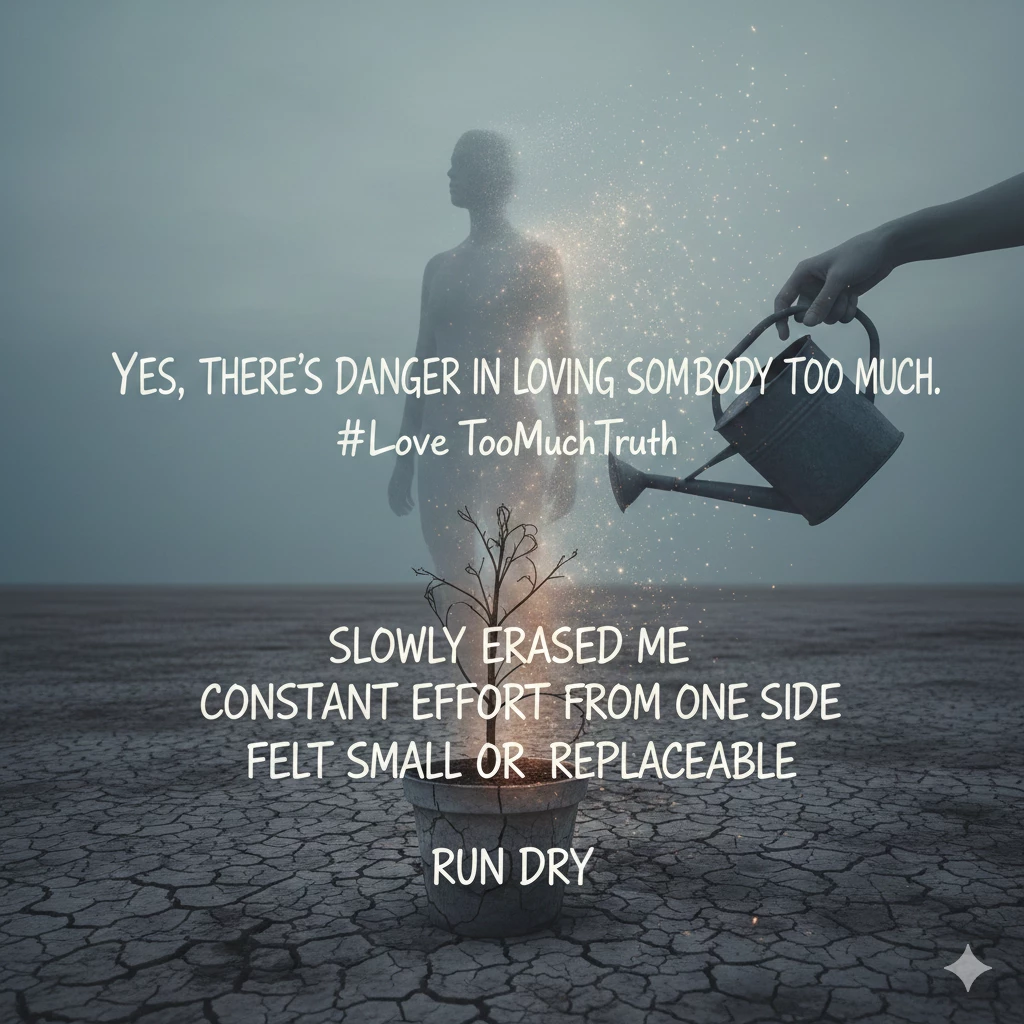
Yes, there’s danger in loving somebody too much. #LoveTooMuchTruth
I didn’t realize it at the time, but I was loving someone in a way that slowly erased me. It was a close friendship. I was always the one checking in first, making plans, fixing misunderstandings, and saying sorry even when I wasn’t wrong. I thought that’s what loyalty looked like. I believed if I cared more, tried more, and stayed patient, everything would stay strong.
The warning signs were small but painful. They would disappear when I needed support. My feelings felt “too much” to them, but their problems always became mine to solve. I ignored that imbalance because I didn’t want to lose the bond. I kept telling myself, “This is just how friendships are.”
Loving too much cost me my peace. I started overthinking every message, every tone, every silence. I felt anxious instead of secure. The biggest lesson I learned is that love shouldn’t feel like constant effort from one side. It shouldn’t make you feel small or replaceable.
Now I understand that real love—friendship or otherwise—has balance. You can care deeply, but not at the cost of your self-respect. If you’re the only one pouring water into the plant, eventually you’ll run dry.
#LoveTooMuchTruth
Yes, there’s danger in loving somebody too much. #LoveTooMuchTruth
I didn’t realize it at the time, but I was loving someone in a way that slowly erased me. It was a close friendship. I was always the one checking in first, making plans, fixing misunderstandings, and saying sorry even when I wasn’t wrong. I thought that’s what loyalty looked like. I believed if I cared more, tried more, and stayed patient, everything would stay strong.
The warning signs were small but painful. They would disappear when I needed support. My feelings felt “too much” to them, but their problems always became mine to solve. I ignored that imbalance because I didn’t want to lose the bond. I kept telling myself, “This is just how friendships are.”
Loving too much cost me my peace. I started overthinking every message, every tone, every silence. I felt anxious instead of secure. The biggest lesson I learned is that love shouldn’t feel like constant effort from one side. It shouldn’t make you feel small or replaceable.
Now I understand that real love—friendship or otherwise—has balance. You can care deeply, but not at the cost of your self-respect. If you’re the only one pouring water into the plant, eventually you’ll run dry.


30 reactions
#LoveTooMuchTruth
Yes, there’s definitely danger in loving somebody too much!
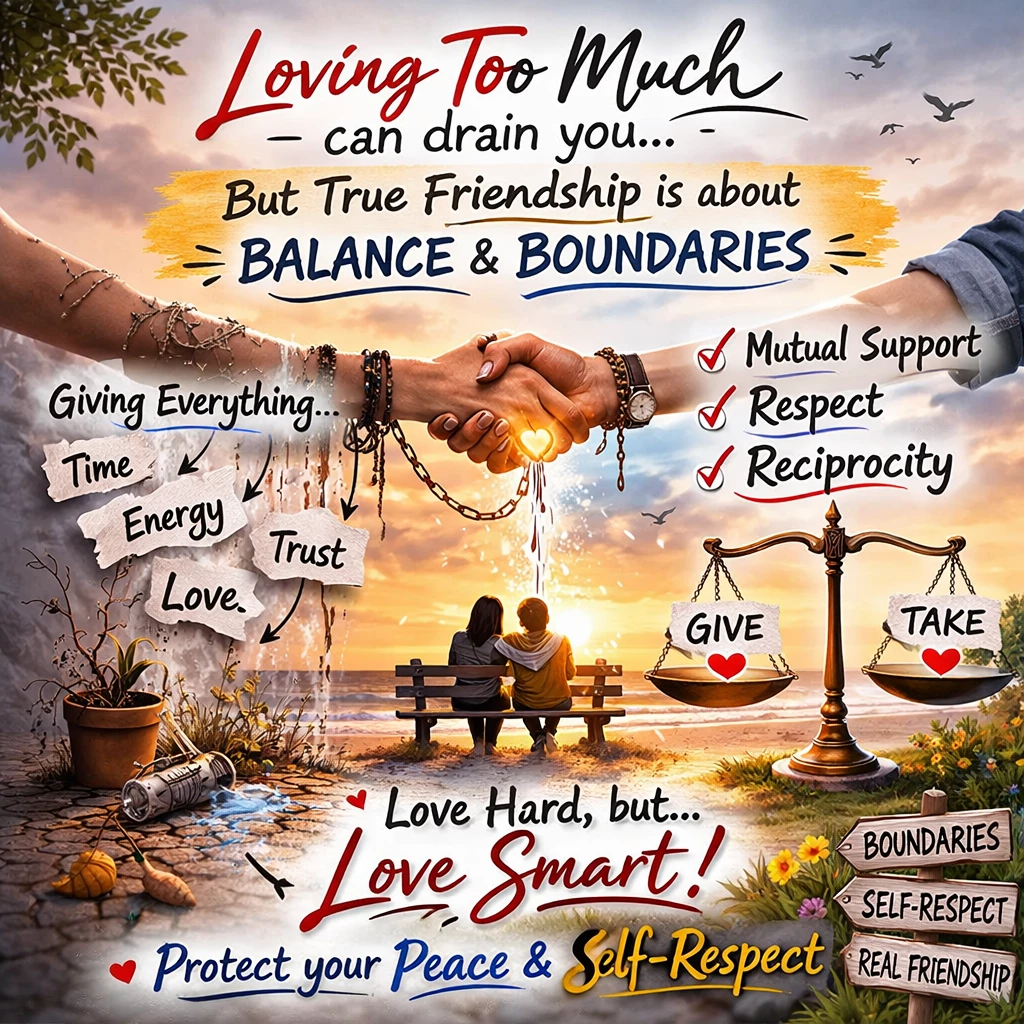
I want to talk about love in general, so I’ll focus on friendship. A few years ago, I had a friend I cared about deeply. I gave my time, advice, energy, and even money whenever they needed it. At first, it felt natural, I was happy to support them. But over time, I started noticing that I was always the one reaching out, always planning, always adjusting my schedule to theirs. I ignored little red flags, like when they dismissed my feelings, took my efforts for granted, or rarely reciprocated any support, because I didn’t want to jeopardize our friendship.
Eventually, it became exhausting. I realized I had lost parts of myself, my hobbies, my personal time, even some of my self-respect. I felt drained, anxious, and sometimes invisible. I was giving everything while they were mostly taking, and that imbalance created tension I hadn’t anticipated.
The cost of loving too much was clear, emotional fatigue, frustration, and a sense of losing my own identity. But it also taught me something invaluable, love, even in friendship, requires boundaries. True care isn’t self-erasure, it’s mutual support. Loving without limits might feel noble, but it can silently chip away at your peace, confidence, and clarity.
Looking back, I still value friendship, but now I make sure my love and effort are balanced. I’ve learned to protect my energy while still being compassionate and present. Loving too much can hurt, but it also teaches you to love smarter, not just harder. ❤️
Yes, there’s definitely danger in loving somebody too much!
I want to talk about love in general, so I’ll focus on friendship. A few years ago, I had a friend I cared about deeply. I gave my time, advice, energy, and even money whenever they needed it. At first, it felt natural, I was happy to support them. But over time, I started noticing that I was always the one reaching out, always planning, always adjusting my schedule to theirs. I ignored little red flags, like when they dismissed my feelings, took my efforts for granted, or rarely reciprocated any support, because I didn’t want to jeopardize our friendship.
Eventually, it became exhausting. I realized I had lost parts of myself, my hobbies, my personal time, even some of my self-respect. I felt drained, anxious, and sometimes invisible. I was giving everything while they were mostly taking, and that imbalance created tension I hadn’t anticipated.
The cost of loving too much was clear, emotional fatigue, frustration, and a sense of losing my own identity. But it also taught me something invaluable, love, even in friendship, requires boundaries. True care isn’t self-erasure, it’s mutual support. Loving without limits might feel noble, but it can silently chip away at your peace, confidence, and clarity.
Looking back, I still value friendship, but now I make sure my love and effort are balanced. I’ve learned to protect my energy while still being compassionate and present. Loving too much can hurt, but it also teaches you to love smarter, not just harder. ❤️

4

3

2
1 reactions
#LoveTooMuchTruth
and
Yes — there is danger in loving someone too much.
I learned this the hard way in a close friendship. I used to put that person before everything — my time, my plans, even my mood depended on how they treated me that day. If they were distant, I felt anxious. If they were upset, I felt responsible. I ignored small red flags like them canceling plans repeatedly or only calling when they needed emotional support. I kept telling myself, “It’s okay, this is what loyalty looks like.”
But slowly, I noticed I was shrinking. I stopped sharing my own problems because I didn’t want to “burden” them. I excused behavior that hurt me because I was scared of losing the bond. That fear was the biggest warning sign — love should not feel like walking on eggshells. I realized I wasn’t loving them; I was clinging to the idea of being needed.
What did it cost me? My peace. My confidence. My balance.
What did it teach me? That healthy love has boundaries. Real love doesn’t require you to abandon yourself. You can care deeply without losing your identity. Now I believe love should feel safe, mutual, and calm — not desperate or draining.
and
Yes — there is danger in loving someone too much.
I learned this the hard way in a close friendship. I used to put that person before everything — my time, my plans, even my mood depended on how they treated me that day. If they were distant, I felt anxious. If they were upset, I felt responsible. I ignored small red flags like them canceling plans repeatedly or only calling when they needed emotional support. I kept telling myself, “It’s okay, this is what loyalty looks like.”
But slowly, I noticed I was shrinking. I stopped sharing my own problems because I didn’t want to “burden” them. I excused behavior that hurt me because I was scared of losing the bond. That fear was the biggest warning sign — love should not feel like walking on eggshells. I realized I wasn’t loving them; I was clinging to the idea of being needed.
What did it cost me? My peace. My confidence. My balance.
What did it teach me? That healthy love has boundaries. Real love doesn’t require you to abandon yourself. You can care deeply without losing your identity. Now I believe love should feel safe, mutual, and calm — not desperate or draining.
1