
Astronomy photo of the day (APOD) - September 14, 2024
The Moona Lisa
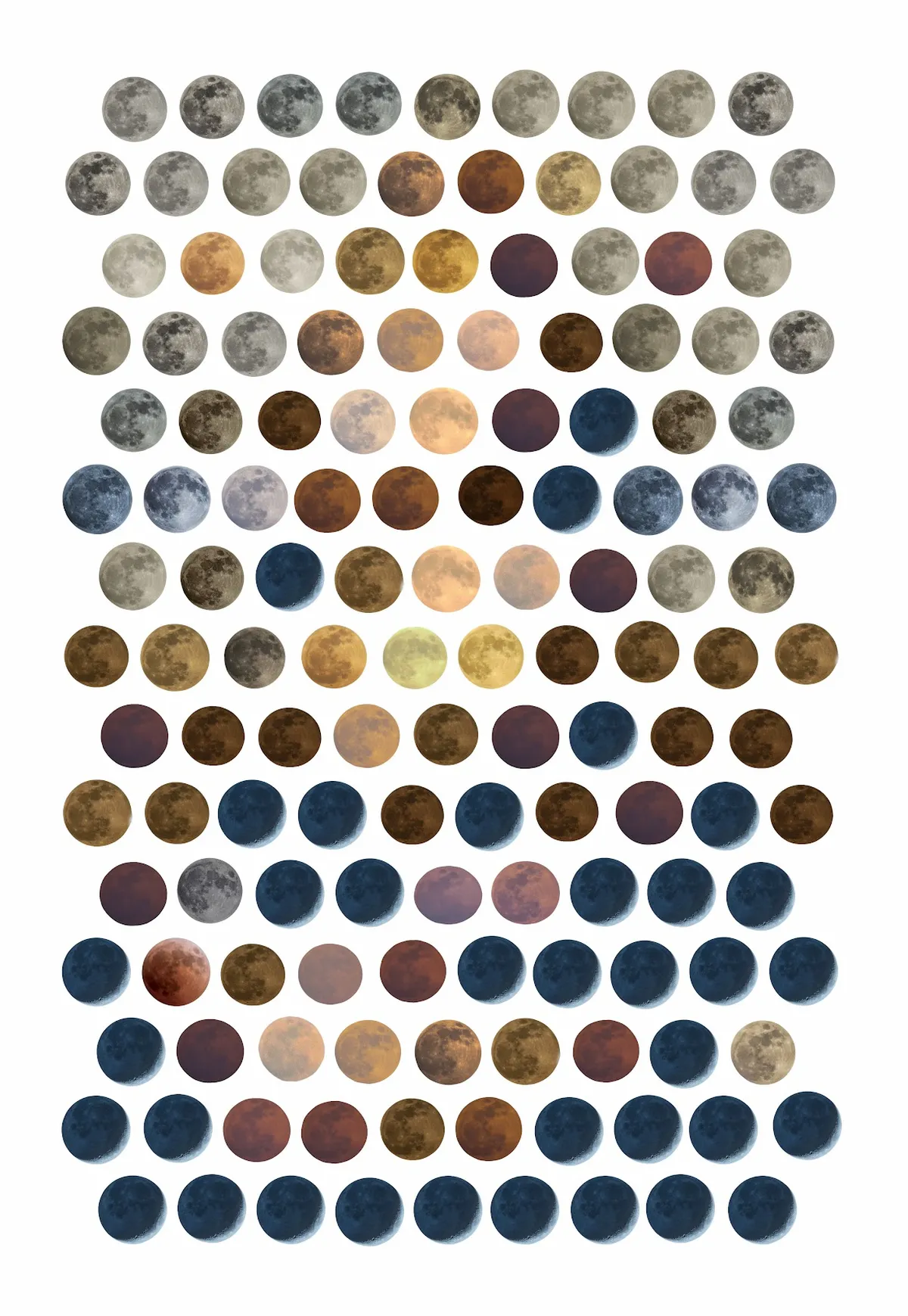
Only natural colors of the Moon in planet Earth's sky appear in this creative visual presentation. Arranged as pixels in a framed image, the lunar disks were photographed at different times. Their varying hues are ultimately due to reflected sunlight affected by changing atmospheric conditions and the alignment geometry of Moon, Earth, and Sun. Here, the darkest lunar disks are the colors of earthshine. A description of earthshine, in terms of sunlight reflected by Earth's oceans illuminating the Moon's dark surface, was written over 500 years ago by Leonardo da Vinci. But stand farther back from your screen or just shift your gaze to the smaller versions of the image. You might also see one of da Vinci's most famous works of art .
Source & Copyright: Gianni Sarcone and Marcella Giulia Pace
#space #apod #september14
The Moona Lisa
Only natural colors of the Moon in planet Earth's sky appear in this creative visual presentation. Arranged as pixels in a framed image, the lunar disks were photographed at different times. Their varying hues are ultimately due to reflected sunlight affected by changing atmospheric conditions and the alignment geometry of Moon, Earth, and Sun. Here, the darkest lunar disks are the colors of earthshine. A description of earthshine, in terms of sunlight reflected by Earth's oceans illuminating the Moon's dark surface, was written over 500 years ago by Leonardo da Vinci. But stand farther back from your screen or just shift your gaze to the smaller versions of the image. You might also see one of da Vinci's most famous works of art .
Source & Copyright: Gianni Sarcone and Marcella Giulia Pace
#space #apod #september14


6

3

2

3 reactions
M51 (MIRI image)
Ripple effect 🌀
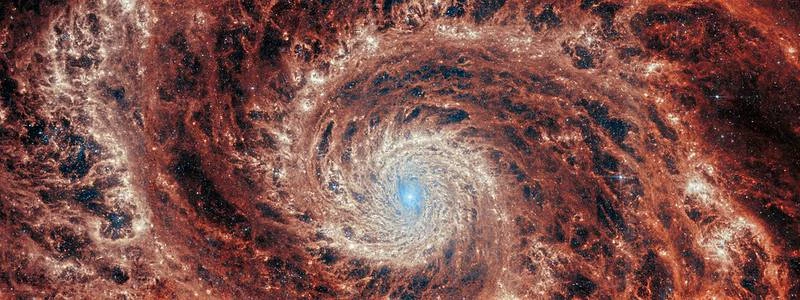
Seen here by Webb's Mid-Infrared Instrument (MIRI) is the galaxy M51, also known as NGC 5194. The gravity of its neighbor, the dwarf galaxy NGC 5195, is thought to be partially responsible for those prominent & distinct spiral arms! While MIRI brings out the web-like structure of the dust in the galaxy, NIRCam focuses more on ionized gas from newly formed star clusters. More: esawebb.org/images/potm2308c/
#nasa #jameswebb #space #telescope #science #tangled
Ripple effect 🌀
Seen here by Webb's Mid-Infrared Instrument (MIRI) is the galaxy M51, also known as NGC 5194. The gravity of its neighbor, the dwarf galaxy NGC 5195, is thought to be partially responsible for those prominent & distinct spiral arms! While MIRI brings out the web-like structure of the dust in the galaxy, NIRCam focuses more on ionized gas from newly formed star clusters. More: esawebb.org/images/potm2308c/
#nasa #jameswebb #space #telescope #science #tangled
2
7 reactions
Long-wavelength NIRCam Orion mosaic in ESASky
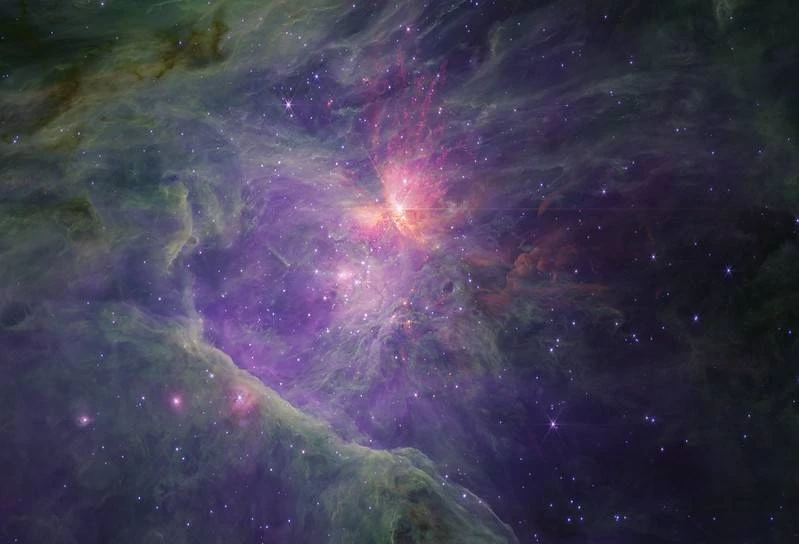
One of the brightest nebulae in the night sky is Messier 42, the Orion Nebula, located south of Orion’s belt. At its core is the young Trapezium Cluster of stars, the most massive of which illuminate the surrounding gas and dust with their intense ultraviolet radiation fields, while protostars continue to form today in the OMC-1 molecular cloud behind.
#nasa #jameswebb #space #telescope #science #tangled
One of the brightest nebulae in the night sky is Messier 42, the Orion Nebula, located south of Orion’s belt. At its core is the young Trapezium Cluster of stars, the most massive of which illuminate the surrounding gas and dust with their intense ultraviolet radiation fields, while protostars continue to form today in the OMC-1 molecular cloud behind.
#nasa #jameswebb #space #telescope #science #tangled
6