
2 reactions
What is true enjoyment?
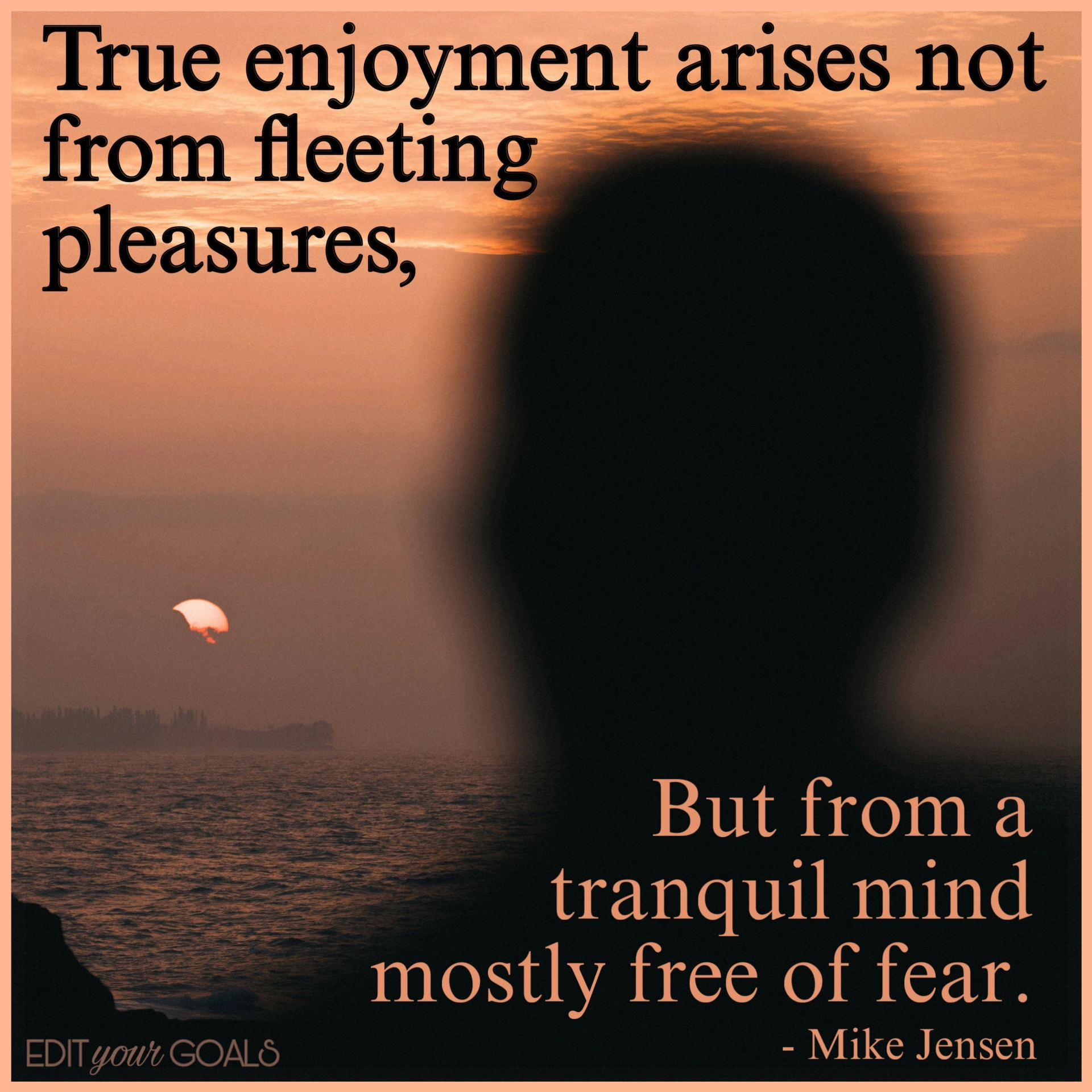
Let me share a perspective on what true enjoyment really means. It’s not about fleeting pleasures or indulgences; it’s about achieving a state of tranquility and freedom from fear. This idea resonates with the teachings of Epicurus, who believed that the highest pleasure is found in the absence of pain and fear.
Imagine living without the constant worry of what others think, without the anxiety of future uncertainties, and without the fear of death or divine retribution. Epicurus taught that by understanding the nature of the world and limiting our desires, we can attain ataraxia—a state of serene calmness.
In our modern lives, this translates to embracing simplicity, cultivating meaningful friendships, and focusing on the present moment. It’s about letting go of unnecessary desires and fears that disturb our peace of mind.
So, when we talk about true enjoyment, it’s not about the highs of pleasure but the steady state of contentment that comes from inner peace. It’s about freeing ourselves from the chains of fear and embracing a life of simplicity and understanding.
By adopting this mindset, we can redefine enjoyment not as a pursuit of pleasure but as a journey towards inner tranquility.
If this reached you or there was something that truly resonated with you, please like and share in hopes this will maybe reach someone that it could help.
-Coach Mike
EDIT your GOALS
Every
Day
Internal
Thoughts
Guarantees
Our
Absolute
Life
Situations
#enjoyment #pleasure #tranquil #mind #fearless
Background Picture by
Jakob Owens
Let me share a perspective on what true enjoyment really means. It’s not about fleeting pleasures or indulgences; it’s about achieving a state of tranquility and freedom from fear. This idea resonates with the teachings of Epicurus, who believed that the highest pleasure is found in the absence of pain and fear.
Imagine living without the constant worry of what others think, without the anxiety of future uncertainties, and without the fear of death or divine retribution. Epicurus taught that by understanding the nature of the world and limiting our desires, we can attain ataraxia—a state of serene calmness.
In our modern lives, this translates to embracing simplicity, cultivating meaningful friendships, and focusing on the present moment. It’s about letting go of unnecessary desires and fears that disturb our peace of mind.
So, when we talk about true enjoyment, it’s not about the highs of pleasure but the steady state of contentment that comes from inner peace. It’s about freeing ourselves from the chains of fear and embracing a life of simplicity and understanding.
By adopting this mindset, we can redefine enjoyment not as a pursuit of pleasure but as a journey towards inner tranquility.
If this reached you or there was something that truly resonated with you, please like and share in hopes this will maybe reach someone that it could help.
-Coach Mike
EDIT your GOALS
Every
Day
Internal
Thoughts
Guarantees
Our
Absolute
Life
Situations
#enjoyment #pleasure #tranquil #mind #fearless
Background Picture by
Jakob Owens


2
0 reactions
Are you thinking pain or pleasure?
Procrastination is a universal human tendency rooted in our natural motivation by pain and pleasure. While we aspire to improve our lives—whether through healthier habits, better relationships, or meaningful projects—we often delay action. This hesitation stems from our perception of pain associated with taking action, even when the task itself is beneficial. The thought of discomfort, effort, or sacrifice outweighs the potential rewards in our minds, leading to excuses and inaction.
Our decisions are almost always influenced by the balance of pain versus pleasure. If we view a task as difficult, inconvenient, or emotionally taxing, our instinct is to avoid it, seeking immediate comfort instead. However, this avoidance often reinforces procrastination, as the longer we delay, the more daunting the task seems. Conversely, when we associate a task with pleasure—whether it’s the satisfaction of achievement, the joy of progress, or the excitement of growth—we’re naturally drawn to it.
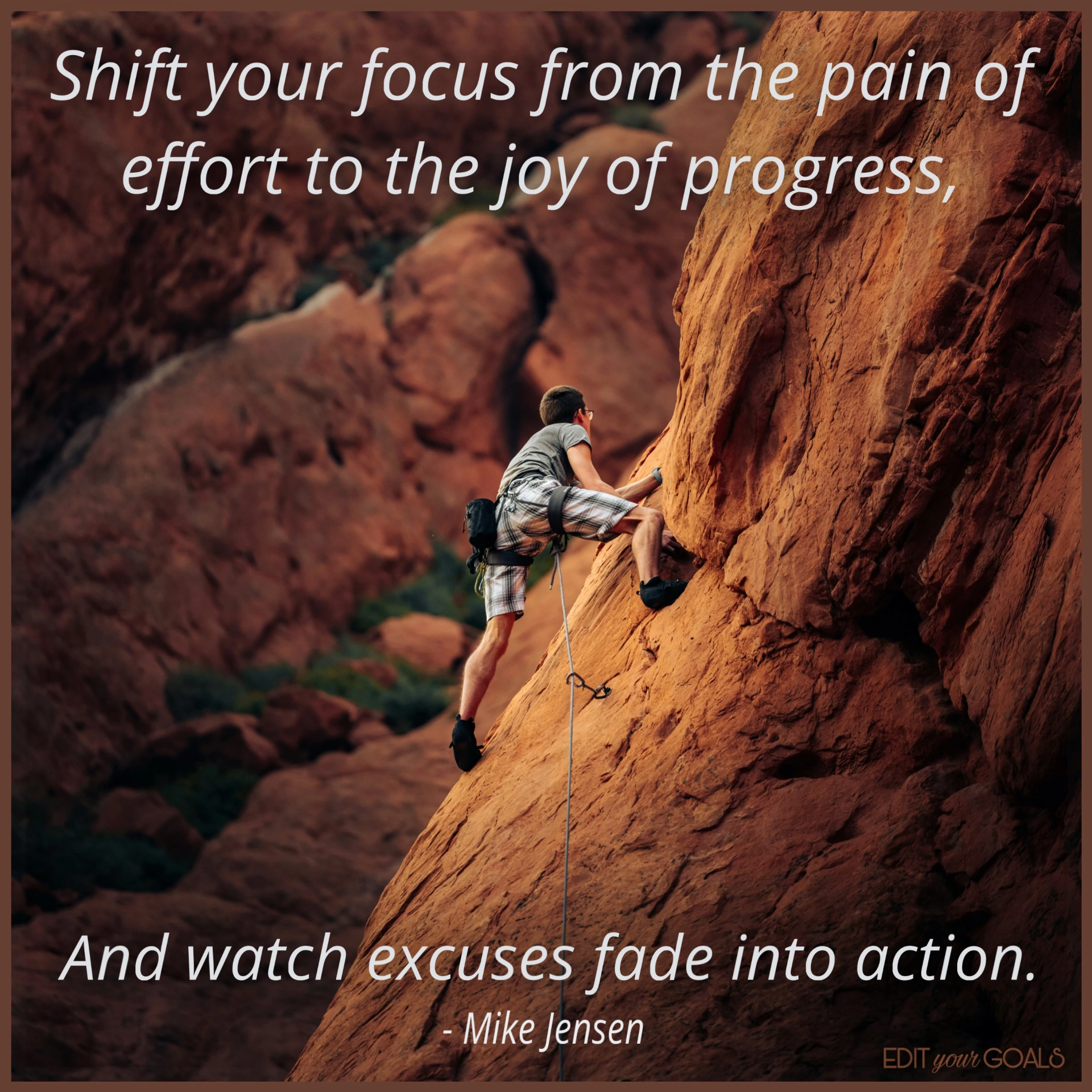
The challenge lies in shifting our perspective. If we can reframe the task and focus on the rewards rather than the obstacles, our motivation can transform. For example, instead of seeing exercise as physically taxing, we can focus on the vitality and confidence it brings. When we emphasize the pleasure over the perceived pain, our excuses fade, and action becomes effortless.
Ultimately, by consciously directing our thoughts toward the benefits, we can break the cycle of procrastination and pursue the life we desire with purpose and enthusiasm.
If this reached you or there was something that truly resonated with you, please like and share in hopes this will maybe reach someone that it could help.
-Coach Mike
EDIT your GOALS
Every
Day
Internal
Thoughts
Guarantees
Our
Absolute
Life
Situations
#pleasure #pain #motivation #procastination #action
Background Picture by
Johanser Martinez
Procrastination is a universal human tendency rooted in our natural motivation by pain and pleasure. While we aspire to improve our lives—whether through healthier habits, better relationships, or meaningful projects—we often delay action. This hesitation stems from our perception of pain associated with taking action, even when the task itself is beneficial. The thought of discomfort, effort, or sacrifice outweighs the potential rewards in our minds, leading to excuses and inaction.
Our decisions are almost always influenced by the balance of pain versus pleasure. If we view a task as difficult, inconvenient, or emotionally taxing, our instinct is to avoid it, seeking immediate comfort instead. However, this avoidance often reinforces procrastination, as the longer we delay, the more daunting the task seems. Conversely, when we associate a task with pleasure—whether it’s the satisfaction of achievement, the joy of progress, or the excitement of growth—we’re naturally drawn to it.
The challenge lies in shifting our perspective. If we can reframe the task and focus on the rewards rather than the obstacles, our motivation can transform. For example, instead of seeing exercise as physically taxing, we can focus on the vitality and confidence it brings. When we emphasize the pleasure over the perceived pain, our excuses fade, and action becomes effortless.
Ultimately, by consciously directing our thoughts toward the benefits, we can break the cycle of procrastination and pursue the life we desire with purpose and enthusiasm.
If this reached you or there was something that truly resonated with you, please like and share in hopes this will maybe reach someone that it could help.
-Coach Mike
EDIT your GOALS
Every
Day
Internal
Thoughts
Guarantees
Our
Absolute
Life
Situations
#pleasure #pain #motivation #procastination #action
Background Picture by
Johanser Martinez
12 reactions
Maybe plain brown packaging would be better❗📦
#brainsick #secondhand #toys #pleasure #sextoys #mail #packaging #environmentally #pleasurepack #seasoned #sanitized #crazy #wtf #usps #funny
#brainsick #secondhand #toys #pleasure #sextoys #mail #packaging #environmentally #pleasurepack #seasoned #sanitized #crazy #wtf #usps #funny

3

3

3