
2 reactions
Medical science is advancing at an unprecedented pace, with regenerative medicine standing at the forefront of this transformation. Among its most promising breakthroughs are stem cells—the body’s raw materials from which all other cells with specialized functions are generated.
What Makes Stem Cells Unique?
Unlike ordinary cells, stem cells possess two extraordinary capabilities:
Self-Renewal: They can divide and replicate themselves over long periods.
Differentiation: Under the right conditions, they can transform into specialized cells such as muscle, nerve, or blood cells to repair damaged tissue.
Key Categories & Applications
Embryonic Stem Cells (ESCs): Pluripotent cells capable of becoming any cell type, though their use involves ethical considerations.
Adult Stem Cells: Multipotent cells found in tissues like bone marrow and fat, widely used in established therapies such as Bone Marrow Transplants (BMT) for blood cancers.
Cord Blood Stem Cells: Harvested from the umbilical cord post-birth, offering a rich source of blood-forming cells for future therapeutic use.
Induced Pluripotent Stem Cells (iPSCs): Adult cells genetically reprogrammed to behave like embryonic stem cells, opening ethical and highly effective avenues for research.
The Economic & Regulatory Perspective
Beyond clinical potential, biotechnology and stem cell research represent a high-growth sector with significant implications for healthcare economics. For emerging markets like Bangladesh, expanding access to advanced therapies requires a balanced approach:
Establishing clear, robust national regulatory frameworks to ensure ethical standards and patient safety.
Encouraging responsible private and public investment in medical research infrastructure.
Preventing capital flight by providing advanced medical solutions domestically.
As we look toward a future where non-communicable diseases and age-related conditions present growing socio-economic challenges, investing in and regulating cutting-edge health technologies will be vital for long-term national resilience.
#StemCell #Biotechnology #HealthcareInnovation #RegenerativeMedicine #EconomicGrowth #PublicPolicy #BangladeshBank



1

7 reactions
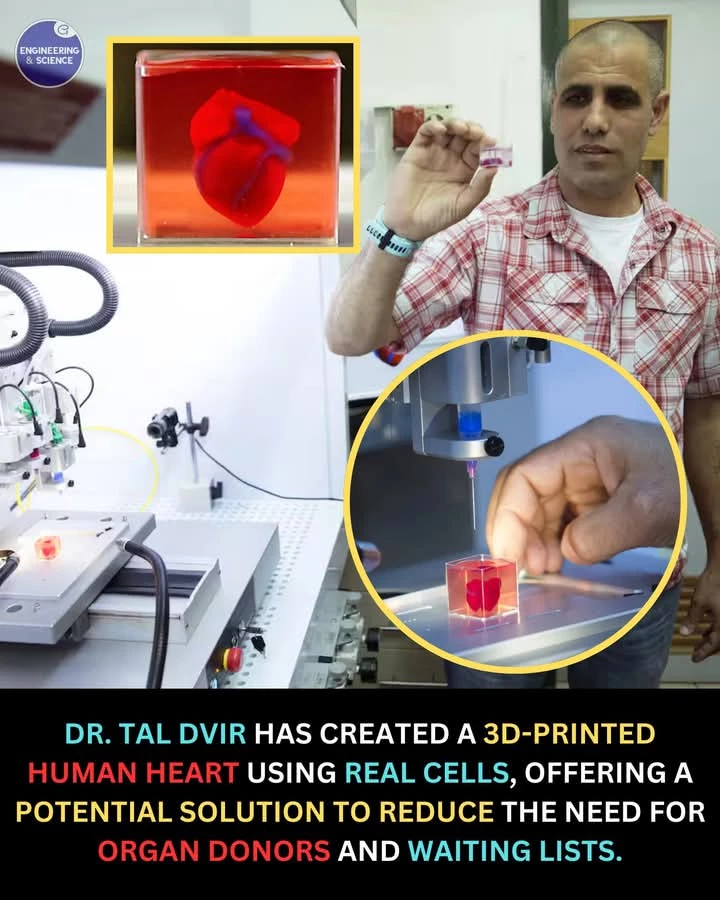
Dr. Tal Dvir, a renowned biotechnology expert at Harvard University, has made a groundbreaking breakthrough by successfully 3D-printing a fully functional human heart using live human cells and advanced tissue engineering. This cutting-edge medical innovation has the potential to revolutionize organ transplantation by enabling the creation of customized, lab-grown organs that could eliminate the reliance on organ donors and drastically reduce organ rejection risks.
The 3D-printed artificial heart, designed with intricate vascular structures, bioengineered tissues, and precise cellular architecture, mimics a natural human heart’s complex functionality. This pioneering regenerative medicine technology could solve critical challenges like shortages of transplantable organs, immune system rejection, and long waiting lists for life-saving surgeries. By utilizing a patient’s own stem cells, this breakthrough ensures personalized treatment, reducing the risk of autoimmune responses and increasing surgical success rates.
This scientific advancement in regenerative healthcare represents a monumental leap forward in bioprinting, medical technology, and precision medicine. As research progresses, biofabricated organs could soon become a mainstream solution, transforming the future of medicine and offering life-saving solutions to millions worldwide.
#3DPrinting #BioprintingTechnology #RegenerativeMedicine #MedicalBreakthrough #FutureOfHealthcare #StemCellTherapy #AIInHealthcare #LifeSavingInnovation #TissueEngineering #NextGenMedicine
The 3D-printed artificial heart, designed with intricate vascular structures, bioengineered tissues, and precise cellular architecture, mimics a natural human heart’s complex functionality. This pioneering regenerative medicine technology could solve critical challenges like shortages of transplantable organs, immune system rejection, and long waiting lists for life-saving surgeries. By utilizing a patient’s own stem cells, this breakthrough ensures personalized treatment, reducing the risk of autoimmune responses and increasing surgical success rates.
This scientific advancement in regenerative healthcare represents a monumental leap forward in bioprinting, medical technology, and precision medicine. As research progresses, biofabricated organs could soon become a mainstream solution, transforming the future of medicine and offering life-saving solutions to millions worldwide.
#3DPrinting #BioprintingTechnology #RegenerativeMedicine #MedicalBreakthrough #FutureOfHealthcare #StemCellTherapy #AIInHealthcare #LifeSavingInnovation #TissueEngineering #NextGenMedicine
2

2

2