3 reactions
WEB3
Educational Topic: Cross-Network Adoption of Real-World Asset (RWA) Tokenization via Advanced Interoperability Standards
Source Information:
Date of Event: 2026-06-10
Date of Publication: 2026-06-11
Publisher/Primary Source: Global Blockchain Infrastructure Consortium
What Happened?: The large-scale integration of real-world assets (RWAs)—such as government bonds and securities—into cross-chain DeFi platforms, utilizing new, secure interoperability protocols.
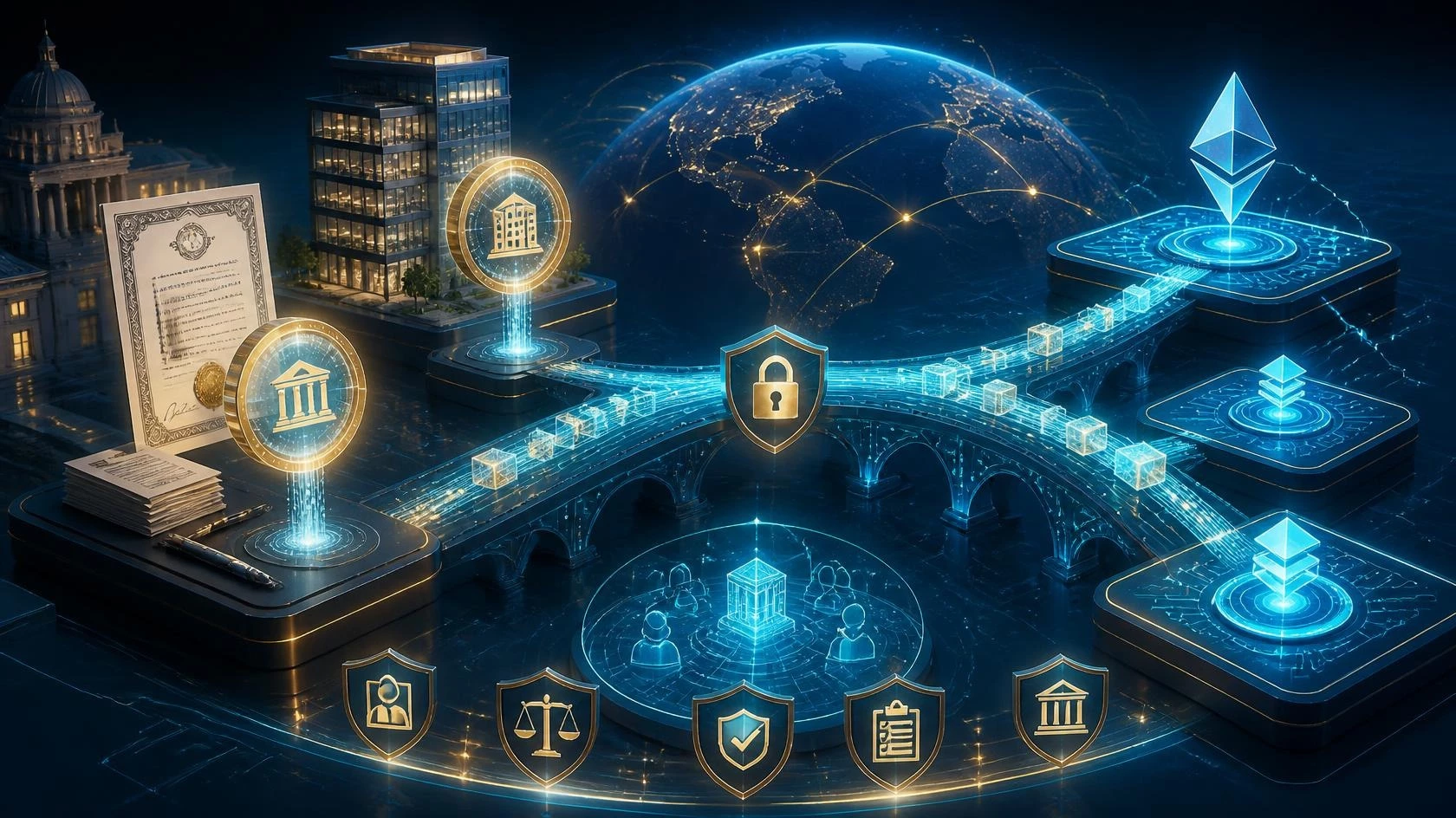
Explanation for Beginners: Imagine valuable physical assets (like buildings or government securities) being converted into "digital certificates" on a blockchain. With these new standards, such certificates can be easily moved and traded across different computer networks, eliminating the need for traditional intermediaries.
How Does It Work?:
Physical assets are verified and represented by unique digital tokens (the tokenization process).
Secure cross-chain bridge protocols connect various blockchains (e.g., Ethereum and Layer 2 networks).
Smart contracts execute transfers or collateralization automatically and transparently, eliminating the risk of double-spending or fraud.
Why Is This Important?: It securely bridges trillions of dollars in traditional financial liquidity with the high efficiency of the Web3 ecosystem.
Real-World Impact:
Current Status: An increase in institutional RWA transaction volume across several prominent DeFi protocols.
Future Outlook: Lower capital costs for asset issuers and broader global access for retail investors.
Opportunities and Risks:
Opportunities: Portfolio diversification through assets with stable yields and 24/7 liquidity. Risks: Potential vulnerabilities in smart contracts (smart contract bugs) or cross-jurisdictional regulatory risks.
Example Application: Issuance of digital sovereign debt securities that can serve as instant collateral for stablecoin loans across various DeFi platforms of the user's choice.
Key Takeaways:
Interoperability is the key to integrating traditional finance with decentralized finance.
Infrastructure security must be the top priority when tokenizing high-value assets.
Legal compliance goes hand in hand with technological innovation.
Conclusion: Cross-chain RWA (Real-World Asset) tokenization ushers in a new era of global financial efficiency, bridging the real world and Web3.
Level of Certainty: Confirmed Fact.
Real-world assets are moving ever closer to the digital realm! 🌐 Through the adoption of cross-chain RWA (Real-World Asset) tokenization, securities and physical assets can now be traded seamlessly and securely across various blockchain platforms.
What does this mean for us? It serves as a major bridge, connecting the liquidity of traditional institutions with the speed and transparency of Web3. Global financial efficiency is shifting to a whole new level.
What are your thoughts on the future of asset tokenization? Let us know in the comments! 👇
#Web3 #RWA #Blockchain #Tokenization #DeFi #DigitalEducation
Educational Topic: Cross-Network Adoption of Real-World Asset (RWA) Tokenization via Advanced Interoperability Standards
Source Information:
Date of Event: 2026-06-10
Date of Publication: 2026-06-11
Publisher/Primary Source: Global Blockchain Infrastructure Consortium
What Happened?: The large-scale integration of real-world assets (RWAs)—such as government bonds and securities—into cross-chain DeFi platforms, utilizing new, secure interoperability protocols.
Explanation for Beginners: Imagine valuable physical assets (like buildings or government securities) being converted into "digital certificates" on a blockchain. With these new standards, such certificates can be easily moved and traded across different computer networks, eliminating the need for traditional intermediaries.
How Does It Work?:
Physical assets are verified and represented by unique digital tokens (the tokenization process).
Secure cross-chain bridge protocols connect various blockchains (e.g., Ethereum and Layer 2 networks).
Smart contracts execute transfers or collateralization automatically and transparently, eliminating the risk of double-spending or fraud.
Why Is This Important?: It securely bridges trillions of dollars in traditional financial liquidity with the high efficiency of the Web3 ecosystem.
Real-World Impact:
Current Status: An increase in institutional RWA transaction volume across several prominent DeFi protocols.
Future Outlook: Lower capital costs for asset issuers and broader global access for retail investors.
Opportunities and Risks:
Opportunities: Portfolio diversification through assets with stable yields and 24/7 liquidity. Risks: Potential vulnerabilities in smart contracts (smart contract bugs) or cross-jurisdictional regulatory risks.
Example Application: Issuance of digital sovereign debt securities that can serve as instant collateral for stablecoin loans across various DeFi platforms of the user's choice.
Key Takeaways:
Interoperability is the key to integrating traditional finance with decentralized finance.
Infrastructure security must be the top priority when tokenizing high-value assets.
Legal compliance goes hand in hand with technological innovation.
Conclusion: Cross-chain RWA (Real-World Asset) tokenization ushers in a new era of global financial efficiency, bridging the real world and Web3.
Level of Certainty: Confirmed Fact.
Real-world assets are moving ever closer to the digital realm! 🌐 Through the adoption of cross-chain RWA (Real-World Asset) tokenization, securities and physical assets can now be traded seamlessly and securely across various blockchain platforms.
What does this mean for us? It serves as a major bridge, connecting the liquidity of traditional institutions with the speed and transparency of Web3. Global financial efficiency is shifting to a whole new level.
What are your thoughts on the future of asset tokenization? Let us know in the comments! 👇
#Web3 #RWA #Blockchain #Tokenization #DeFi #DigitalEducation


1

1

1
0 reactions
🚀 How Account Abstraction (ERC-4337) is Revolutionizing Web3 UX
Traditional crypto wallets (EOAs) come with high friction—complex seed phrases, manual key management, and security risks. Account Abstraction is changing the game by transforming crypto wallets into programmable Smart Contract Wallets!
💡 Key Features & Benefits:
• Gasless Transactions: Pay transaction fees with stablecoins or enjoy sponsored gas via Paymasters.
• Social Recovery: Lost your access? Recover your wallet safely using trusted guardians instead of stressing over seed phrases.
• Simplified Onboarding: Sign up effortlessly using Google logins or Passkeys.
• Programmable Security: Flexible, user-centric transaction logic tailored to modern dApps.
While challenges like smart contract complexity and initial gas deployment costs remain, Account Abstraction builds the foundation for seamless Web3 mass adoption.
What are your thoughts on smart contract wallets? Let’s discuss below! 👇
#AccountAbstraction #ERC4337 #Web3 #CryptoWallet #Ethereum #SmartContracts #DeFi #Web3UX #Blockchain #CryptoEducation #TechInnovation
Traditional crypto wallets (EOAs) come with high friction—complex seed phrases, manual key management, and security risks. Account Abstraction is changing the game by transforming crypto wallets into programmable Smart Contract Wallets!
💡 Key Features & Benefits:
• Gasless Transactions: Pay transaction fees with stablecoins or enjoy sponsored gas via Paymasters.
• Social Recovery: Lost your access? Recover your wallet safely using trusted guardians instead of stressing over seed phrases.
• Simplified Onboarding: Sign up effortlessly using Google logins or Passkeys.
• Programmable Security: Flexible, user-centric transaction logic tailored to modern dApps.
While challenges like smart contract complexity and initial gas deployment costs remain, Account Abstraction builds the foundation for seamless Web3 mass adoption.
What are your thoughts on smart contract wallets? Let’s discuss below! 👇
#AccountAbstraction #ERC4337 #Web3 #CryptoWallet #Ethereum #SmartContracts #DeFi #Web3UX #Blockchain #CryptoEducation #TechInnovation
0 reactions
Greetings,
Lowest rate to the pioneer on Satsman
Access to the entire Satsman Project will change from the first of November.
All you need to do is have an active subscription on 1st November and keep that subscription active.
If you are currently on a subscription you don't need to do anything, it will continue as it is.
As long as you maintain it, your price will stay frozen at the old rate. 🥳
You supported Satsman while we were still building it, while we were proving ourselves, and before the Universe, all the new features and everything else you can see today existed.
So while new members will pay the new prices from 1st November, the Pioneers who backed Satsman early will keep the old rate pricing they came in at.
That is my way of saying thank you for believing in Satsman early. 🤗
It also means that if you are already a Pro or Pro Max member, your membership is about to become far more valuable without costing you anything extra, as long as you keep it active.
If you were thinking about going to Pro or Pro Max, now is the time, lock in your Pioneers Price at https://tinyurl.com/2zmnf6m2
#Crypto , #Bitcoin , #Blockchain , #Cryptocurrency , #Trading , #Investing , #DigitalCurrency , #CryptoNews , #CryptoCommunity , #CryptoEducation , #CryptoTips , #CryptoAnalysis , #CryptoUpdates , #CryptoMarket , #CryptoTrading , #CryptoTechnology , #CryptoBeginners , #CryptoExperts , #CryptoReview , #CryptoInnovation
Lowest rate to the pioneer on Satsman
Access to the entire Satsman Project will change from the first of November.
All you need to do is have an active subscription on 1st November and keep that subscription active.
If you are currently on a subscription you don't need to do anything, it will continue as it is.
As long as you maintain it, your price will stay frozen at the old rate. 🥳
You supported Satsman while we were still building it, while we were proving ourselves, and before the Universe, all the new features and everything else you can see today existed.
So while new members will pay the new prices from 1st November, the Pioneers who backed Satsman early will keep the old rate pricing they came in at.
That is my way of saying thank you for believing in Satsman early. 🤗
It also means that if you are already a Pro or Pro Max member, your membership is about to become far more valuable without costing you anything extra, as long as you keep it active.
If you were thinking about going to Pro or Pro Max, now is the time, lock in your Pioneers Price at https://tinyurl.com/2zmnf6m2
#Crypto , #Bitcoin , #Blockchain , #Cryptocurrency , #Trading , #Investing , #DigitalCurrency , #CryptoNews , #CryptoCommunity , #CryptoEducation , #CryptoTips , #CryptoAnalysis , #CryptoUpdates , #CryptoMarket , #CryptoTrading , #CryptoTechnology , #CryptoBeginners , #CryptoExperts , #CryptoReview , #CryptoInnovation