0 reactions
𝐈𝐟 𝐲𝐨𝐮’𝐯𝐞 𝐛𝐞𝐞𝐧 𝐚𝐫𝐨𝐮𝐧𝐝 𝐒𝐨𝐮𝐫𝐜𝐞𝐋𝐞𝐬𝐬 𝐟𝐨𝐫 𝐚 𝐰𝐡𝐢𝐥𝐞, 𝐲𝐨𝐮 𝐤𝐧𝐨𝐰 𝐭𝐡𝐞𝐫𝐞’𝐬 𝐚 𝐥𝐨𝐭 𝐠𝐨𝐢𝐧𝐠 𝐨𝐧.
Digital identity, private communication, AI, finance, blockchain infrastructure, applications, and more — all part of the same ecosystem.
And yes, it can be a lot to take in.
The ecosystem keeps evolving, and naturally, its main digital home has to evolve with it too.
So we rebuilt sourceless.net with a new visual identity, a clearer structure, and a much better overview of the ecosystem, the technology, the platforms, and the roadmap.
For those new to SourceLess, this is a much clearer place to start and understand the ecosystem.
And for those already part of the community, come explore SourceLess in a new way. We’re genuinely happy with this new home, and we’d love to hear what you think.
🌐 https://www.sourceless.net
#SourceLess #Web3 #Blockchain #DigitalIdentity #DigitalInfrastructure
Digital identity, private communication, AI, finance, blockchain infrastructure, applications, and more — all part of the same ecosystem.
And yes, it can be a lot to take in.
The ecosystem keeps evolving, and naturally, its main digital home has to evolve with it too.
So we rebuilt sourceless.net with a new visual identity, a clearer structure, and a much better overview of the ecosystem, the technology, the platforms, and the roadmap.
For those new to SourceLess, this is a much clearer place to start and understand the ecosystem.
And for those already part of the community, come explore SourceLess in a new way. We’re genuinely happy with this new home, and we’d love to hear what you think.
🌐 https://www.sourceless.net
#SourceLess #Web3 #Blockchain #DigitalIdentity #DigitalInfrastructure


0 reactions
𝐀 𝐍𝐞𝐭𝐰𝐨𝐫𝐤 𝐓𝐡𝐚𝐭 𝐃𝐨𝐞𝐬𝐧’𝐭 𝐃𝐞𝐩𝐞𝐧𝐝 𝐨𝐧 𝐎𝐧𝐞 𝐑𝐨𝐮𝐭𝐞
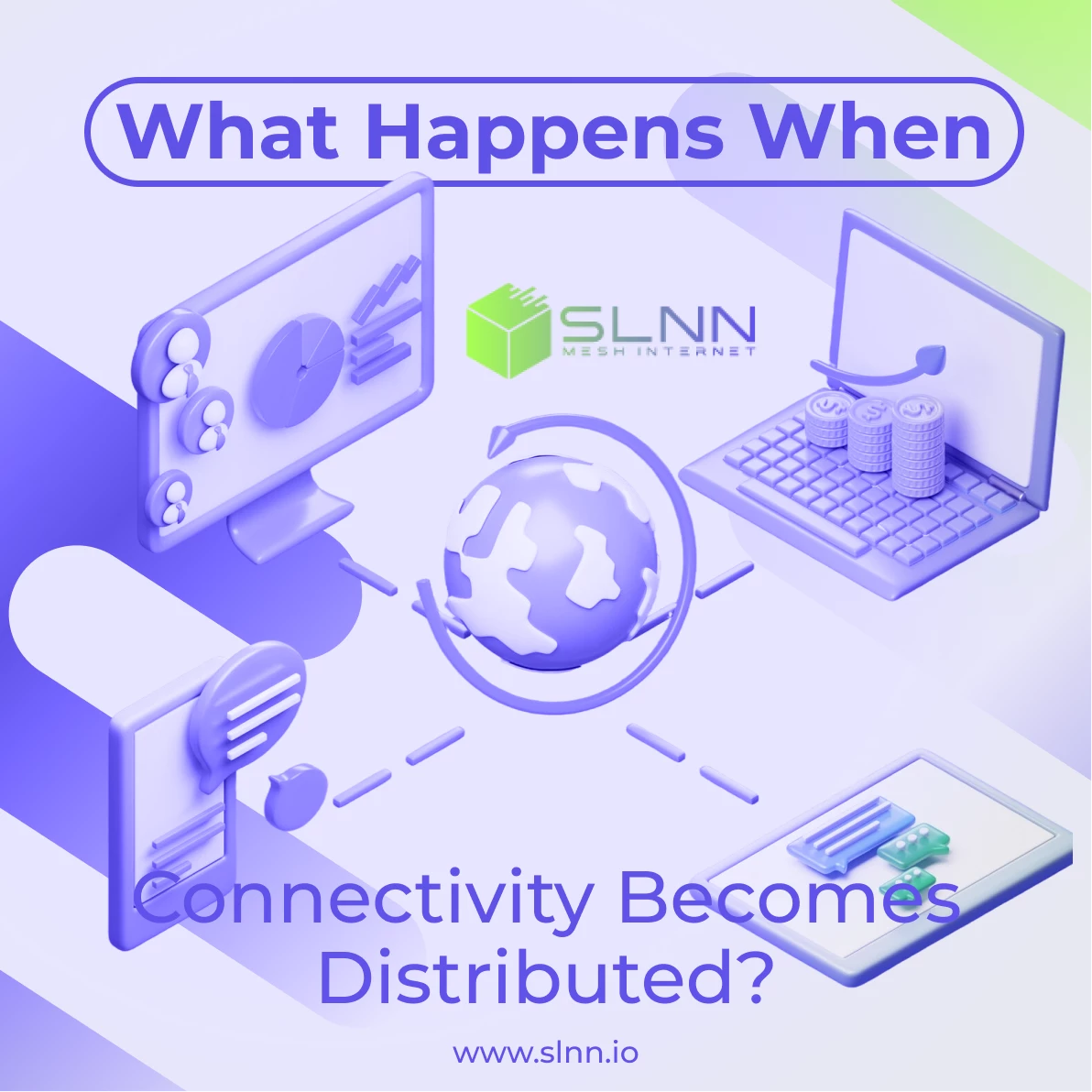
The internet usually gets information from one place to another through a chain of connections.
Mesh networking works in a different way. Devices can connect through each other, so everything doesn’t have to depend on the same connection. If one part of the network goes down, other parts can stay connected. Local communication can also continue when access to the wider internet is disrupted.
𝐒𝐋𝐍𝐍 𝐌𝐞𝐬𝐡 is SourceLess’ decentralized network infrastructure, combining this kind of connectivity with distributed hosting, storage and encrypted communication across the network.
It can operate through Wi-Fi, Bluetooth and 5G, giving devices different ways to connect and exchange information.
SLNN Mesh is the connectivity part of SourceLess, which covers identity, communication, AI, finance and data without putting everything through the same centralized platforms and infrastructure.
𝐋𝐞𝐚𝐫𝐧 𝐚𝐛𝐨𝐮𝐭 𝐒𝐋𝐍𝐍 𝐌𝐞𝐬𝐡 at http://slnn.io
𝐃𝐢𝐬𝐜𝐨𝐯𝐞𝐫 𝐒𝐨𝐮𝐫𝐜𝐞𝐋𝐞𝐬𝐬: http://sourceless.net
#SLNN #SLNNMesh #SourceLess #MeshNetwork #Decentralization #Connectivity #Web3 #DigitalInfrastructure
The internet usually gets information from one place to another through a chain of connections.
Mesh networking works in a different way. Devices can connect through each other, so everything doesn’t have to depend on the same connection. If one part of the network goes down, other parts can stay connected. Local communication can also continue when access to the wider internet is disrupted.
𝐒𝐋𝐍𝐍 𝐌𝐞𝐬𝐡 is SourceLess’ decentralized network infrastructure, combining this kind of connectivity with distributed hosting, storage and encrypted communication across the network.
It can operate through Wi-Fi, Bluetooth and 5G, giving devices different ways to connect and exchange information.
SLNN Mesh is the connectivity part of SourceLess, which covers identity, communication, AI, finance and data without putting everything through the same centralized platforms and infrastructure.
𝐋𝐞𝐚𝐫𝐧 𝐚𝐛𝐨𝐮𝐭 𝐒𝐋𝐍𝐍 𝐌𝐞𝐬𝐡 at http://slnn.io
𝐃𝐢𝐬𝐜𝐨𝐯𝐞𝐫 𝐒𝐨𝐮𝐫𝐜𝐞𝐋𝐞𝐬𝐬: http://sourceless.net
#SLNN #SLNNMesh #SourceLess #MeshNetwork #Decentralization #Connectivity #Web3 #DigitalInfrastructure
0 reactions
𝐁𝐥𝐨𝐜𝐤𝐜𝐡𝐚𝐢𝐧 𝐒𝐭𝐚𝐫𝐭𝐞𝐝 𝐖𝐢𝐭𝐡 𝐚 𝐏𝐫𝐨𝐛𝐥𝐞𝐦, 𝐍𝐨𝐭 𝐚 𝐂𝐮𝐫𝐫𝐞𝐧𝐜𝐲
Long before Bitcoin, cryptographers were already working on how to prove that a digital record existed at a certain time and detect if it was changed later.
In 1991, Bellcore researchers 𝐒𝐭𝐮𝐚𝐫𝐭 𝐇𝐚𝐛𝐞𝐫 𝐚𝐧𝐝 𝐖. 𝐒𝐜𝐨𝐭𝐭 𝐒𝐭𝐨𝐫𝐧𝐞𝐭𝐭𝐚 published a system for cryptographically timestamping digital documents. Each timestamp was linked to earlier ones, so changing an old record would leave evidence. Bitcoin cited their work in 2008.
Thirty-five years later, AI can generate or alter text, images, audio and video at enormous scale. Provenance — where something came from, who created it and what happened to it afterwards — is now a serious technical problem.
One response is 𝐂𝟐𝐏𝐀 𝐂𝐨𝐧𝐭𝐞𝐧𝐭 𝐂𝐫𝐞𝐝𝐞𝐧𝐭𝐢𝐚𝐥𝐬, which uses cryptographic signatures to carry verifiable provenance with digital content. It doesn’t use blockchain.
A major strength of blockchain is allowing different parties to verify the same shared record independently, without one party controlling it.
With 𝐒𝐓𝐑.𝐃𝐨𝐦𝐚𝐢𝐧, ownership is recorded on-chain and can be verified across SourceLess services rather than being tied to one platform account.
𝐖𝐡𝐞𝐧 𝐚𝐧𝐲𝐭𝐡𝐢𝐧𝐠 𝐝𝐢𝐠𝐢𝐭𝐚𝐥 𝐜𝐚𝐧 𝐛𝐞 𝐜𝐨𝐩𝐢𝐞𝐝, 𝐜𝐡𝐚𝐧𝐠𝐞𝐝 𝐨𝐫 𝐠𝐞𝐧𝐞𝐫𝐚𝐭𝐞𝐝 𝐢𝐧 𝐬𝐞𝐜𝐨𝐧𝐝𝐬, 𝐤𝐧𝐨𝐰𝐢𝐧𝐠 𝐰𝐡𝐞𝐫𝐞 𝐢𝐭 𝐜𝐚𝐦𝐞 𝐟𝐫𝐨𝐦, 𝐰𝐡𝐨 𝐨𝐰𝐧𝐬 𝐢𝐭 𝐚𝐧𝐝 𝐰𝐡𝐚𝐭 𝐜𝐡𝐚𝐧𝐠𝐞𝐝 𝐛𝐞𝐜𝐨𝐦𝐞𝐬 𝐞𝐱𝐭𝐫𝐞𝐦𝐞𝐥𝐲 𝐯𝐚𝐥𝐮𝐚𝐛𝐥𝐞.
#SourceLess #Blockchain #Web3 #Cryptocurrency #edtech #blockchaintechnology #cryptography #DigitalInfrastructure #TechnologyEducation #Innovation
Long before Bitcoin, cryptographers were already working on how to prove that a digital record existed at a certain time and detect if it was changed later.
In 1991, Bellcore researchers 𝐒𝐭𝐮𝐚𝐫𝐭 𝐇𝐚𝐛𝐞𝐫 𝐚𝐧𝐝 𝐖. 𝐒𝐜𝐨𝐭𝐭 𝐒𝐭𝐨𝐫𝐧𝐞𝐭𝐭𝐚 published a system for cryptographically timestamping digital documents. Each timestamp was linked to earlier ones, so changing an old record would leave evidence. Bitcoin cited their work in 2008.
Thirty-five years later, AI can generate or alter text, images, audio and video at enormous scale. Provenance — where something came from, who created it and what happened to it afterwards — is now a serious technical problem.
One response is 𝐂𝟐𝐏𝐀 𝐂𝐨𝐧𝐭𝐞𝐧𝐭 𝐂𝐫𝐞𝐝𝐞𝐧𝐭𝐢𝐚𝐥𝐬, which uses cryptographic signatures to carry verifiable provenance with digital content. It doesn’t use blockchain.
A major strength of blockchain is allowing different parties to verify the same shared record independently, without one party controlling it.
With 𝐒𝐓𝐑.𝐃𝐨𝐦𝐚𝐢𝐧, ownership is recorded on-chain and can be verified across SourceLess services rather than being tied to one platform account.
𝐖𝐡𝐞𝐧 𝐚𝐧𝐲𝐭𝐡𝐢𝐧𝐠 𝐝𝐢𝐠𝐢𝐭𝐚𝐥 𝐜𝐚𝐧 𝐛𝐞 𝐜𝐨𝐩𝐢𝐞𝐝, 𝐜𝐡𝐚𝐧𝐠𝐞𝐝 𝐨𝐫 𝐠𝐞𝐧𝐞𝐫𝐚𝐭𝐞𝐝 𝐢𝐧 𝐬𝐞𝐜𝐨𝐧𝐝𝐬, 𝐤𝐧𝐨𝐰𝐢𝐧𝐠 𝐰𝐡𝐞𝐫𝐞 𝐢𝐭 𝐜𝐚𝐦𝐞 𝐟𝐫𝐨𝐦, 𝐰𝐡𝐨 𝐨𝐰𝐧𝐬 𝐢𝐭 𝐚𝐧𝐝 𝐰𝐡𝐚𝐭 𝐜𝐡𝐚𝐧𝐠𝐞𝐝 𝐛𝐞𝐜𝐨𝐦𝐞𝐬 𝐞𝐱𝐭𝐫𝐞𝐦𝐞𝐥𝐲 𝐯𝐚𝐥𝐮𝐚𝐛𝐥𝐞.
#SourceLess #Blockchain #Web3 #Cryptocurrency #edtech #blockchaintechnology #cryptography #DigitalInfrastructure #TechnologyEducation #Innovation