
3 reactions
How do you deal with catabolic people?
Dealing with others, especially those who exude negative or catabolic energy, can be challenging, but it’s also an opportunity for growth. By using the four pillars of happiness—gratitude, compassion, empathy, and forgiveness—we can navigate these interactions with resilience and positivity.
Gratitude allows us to appreciate the lessons and experiences each person brings into our lives, even if they come wrapped in difficulties. By being grateful for the opportunity to learn and grow, we shift our perspective from resistance to acceptance, which empowers us to handle tough situations more effectively.
Compassion enables us to see beyond someone’s negative behavior and recognize their struggles. When we approach others with compassion, we are less likely to take their actions personally and more likely to respond with kindness, fostering a more positive interaction.
Empathy helps us understand the emotions and perspectives of others, making it easier to connect and communicate on a deeper level. This connection can defuse tension and create an atmosphere of mutual respect, even in challenging situations.
Forgiveness is crucial because it frees us from the burden of holding onto negative emotions. It allows us to let go of past grievances and approach each interaction with a fresh, open mindset.
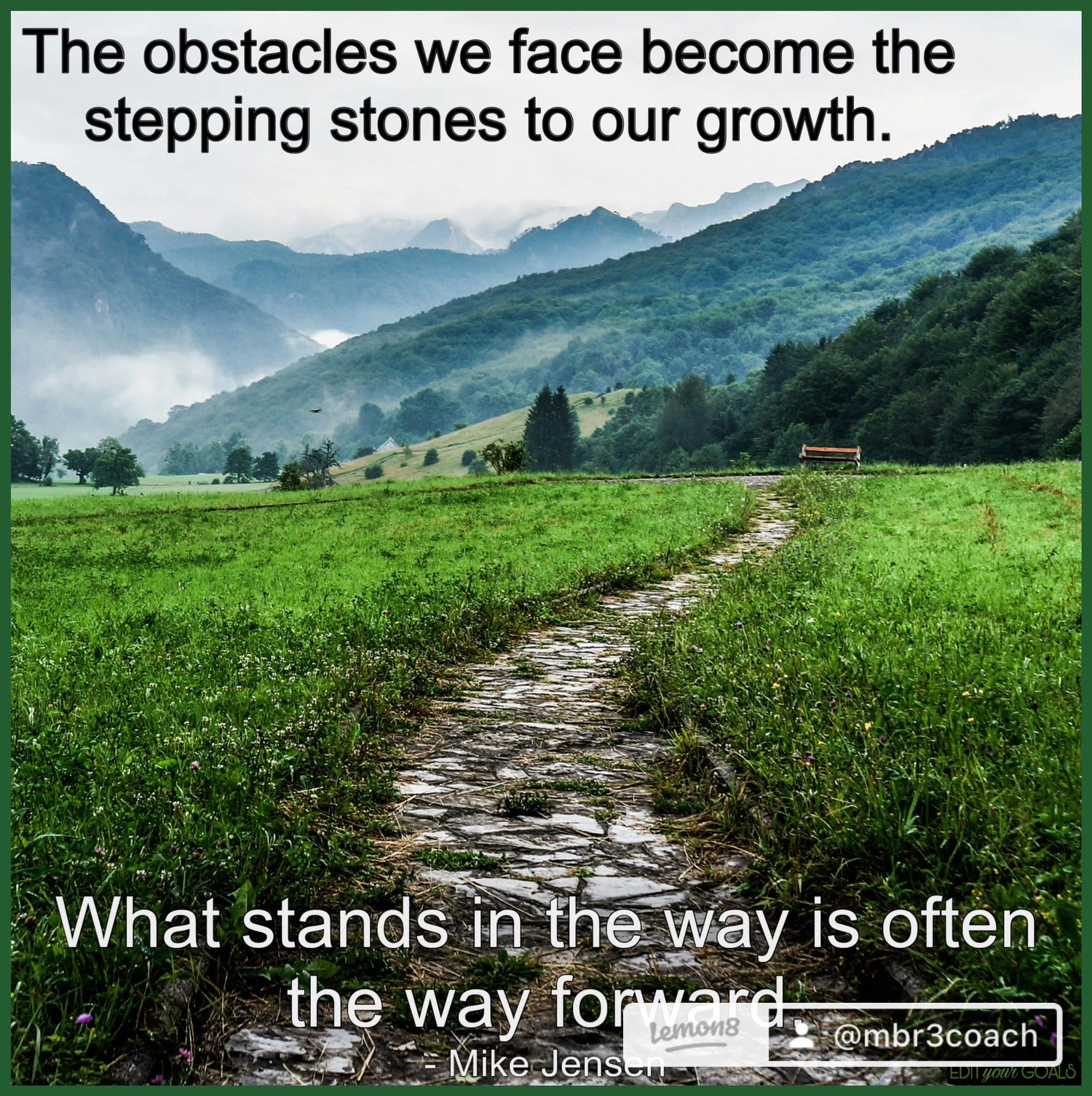
By proactively applying these pillars, we maintain more influence over our intentions and mindset, transforming potential conflicts into opportunities for positive engagement and personal growth. What might seem like an obstacle can actually become a pathway to deeper understanding and more meaningful relationships.
-Coach Mike
EDIT your GOALS
Every
Day
Internal
Thoughts
Guarantees
Our
Absolute
Life
Situations
#negative #positivity #steppingstones #obstacles #growth
Background Picture by
Lili Popper
Dealing with others, especially those who exude negative or catabolic energy, can be challenging, but it’s also an opportunity for growth. By using the four pillars of happiness—gratitude, compassion, empathy, and forgiveness—we can navigate these interactions with resilience and positivity.
Gratitude allows us to appreciate the lessons and experiences each person brings into our lives, even if they come wrapped in difficulties. By being grateful for the opportunity to learn and grow, we shift our perspective from resistance to acceptance, which empowers us to handle tough situations more effectively.
Compassion enables us to see beyond someone’s negative behavior and recognize their struggles. When we approach others with compassion, we are less likely to take their actions personally and more likely to respond with kindness, fostering a more positive interaction.
Empathy helps us understand the emotions and perspectives of others, making it easier to connect and communicate on a deeper level. This connection can defuse tension and create an atmosphere of mutual respect, even in challenging situations.
Forgiveness is crucial because it frees us from the burden of holding onto negative emotions. It allows us to let go of past grievances and approach each interaction with a fresh, open mindset.
By proactively applying these pillars, we maintain more influence over our intentions and mindset, transforming potential conflicts into opportunities for positive engagement and personal growth. What might seem like an obstacle can actually become a pathway to deeper understanding and more meaningful relationships.
-Coach Mike
EDIT your GOALS
Every
Day
Internal
Thoughts
Guarantees
Our
Absolute
Life
Situations
#negative #positivity #steppingstones #obstacles #growth
Background Picture by
Lili Popper


1

1

1
0 reactions
What is positive or negative?
When I talk to clients about energy, I try to base the differences on non-judgmental words like anabolic and catabolic.
Those words are more general in explaining the two conditions of energy. Anabolic is going to be a growing and nurturing energy. Where catabolic will be a restrictive and draining energy.
Positive and negative are too easy to place judgment on. What that means is what I think is positive, you might think is negative. Same subject, two different opinions.
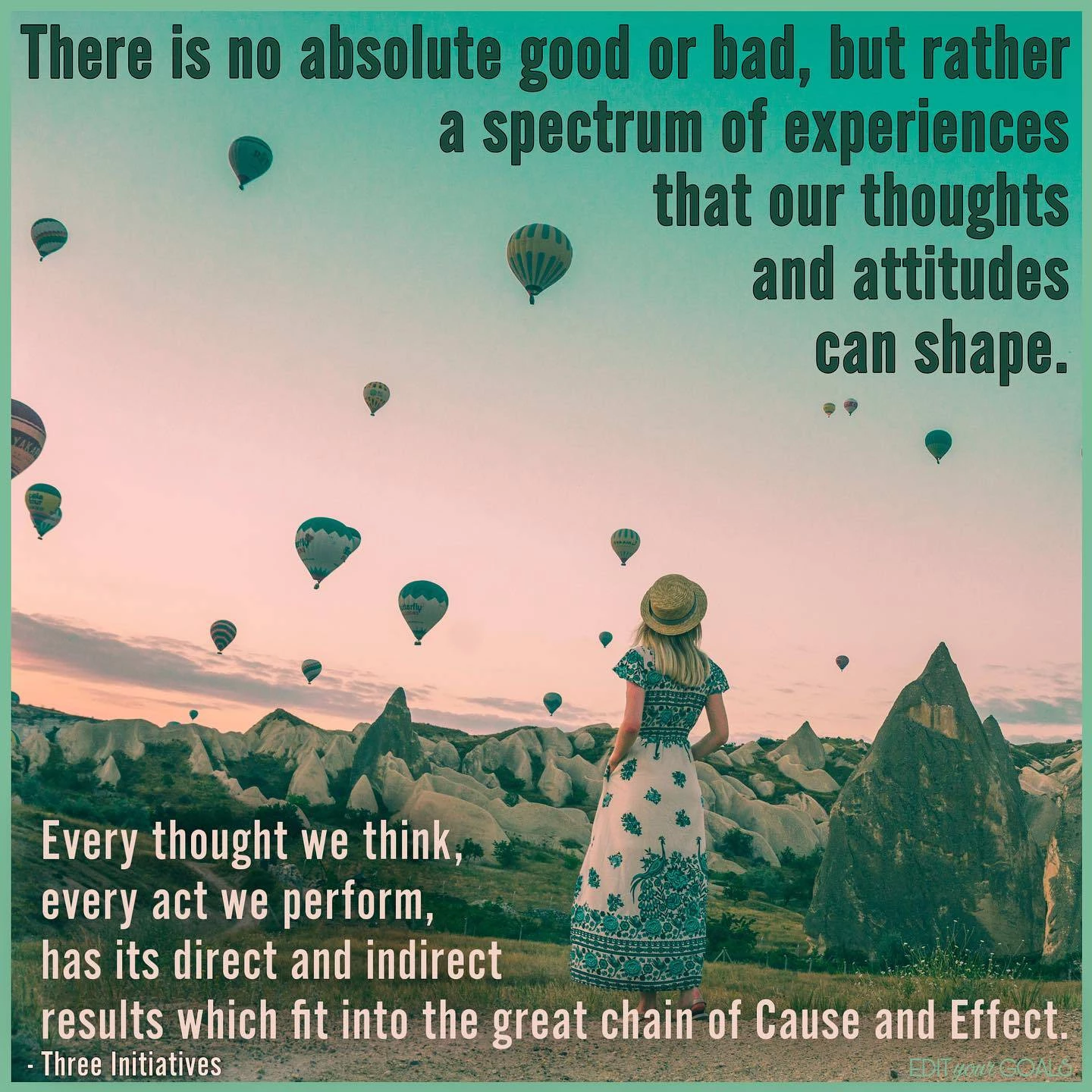
This is why we have to be mindful of the thoughts, emotions, and actions we produce. All of these help us perceive any moment by our own judgement. Our personal perception is how we experience anything.
Even though we may not be able to change what is actually happening in the moment, we can always change how we perceive it. How we experience it. What energy we use to understand it.
Don’t let catabolic energy taint the moment. Shift to a more anabolic energy like responsibility, concern, joy, passion, love, and non-judgment to truly experience the greatness in any moment.
Remember, you create your reality all from the thoughts and perceptions you have.
What reality do you want to live?
Make the best choice for you.
-Coach Mike
EDIT your GOALS
Every
Day
Internal
Thoughts
Guarantees
Our
Absolute
Life
Situations
#thoughts #perception #energy #positive #negative
Background Picture by
Mesut Kaya
When I talk to clients about energy, I try to base the differences on non-judgmental words like anabolic and catabolic.
Those words are more general in explaining the two conditions of energy. Anabolic is going to be a growing and nurturing energy. Where catabolic will be a restrictive and draining energy.
Positive and negative are too easy to place judgment on. What that means is what I think is positive, you might think is negative. Same subject, two different opinions.
This is why we have to be mindful of the thoughts, emotions, and actions we produce. All of these help us perceive any moment by our own judgement. Our personal perception is how we experience anything.
Even though we may not be able to change what is actually happening in the moment, we can always change how we perceive it. How we experience it. What energy we use to understand it.
Don’t let catabolic energy taint the moment. Shift to a more anabolic energy like responsibility, concern, joy, passion, love, and non-judgment to truly experience the greatness in any moment.
Remember, you create your reality all from the thoughts and perceptions you have.
What reality do you want to live?
Make the best choice for you.
-Coach Mike
EDIT your GOALS
Every
Day
Internal
Thoughts
Guarantees
Our
Absolute
Life
Situations
#thoughts #perception #energy #positive #negative
Background Picture by
Mesut Kaya

47 reactions
Let's talk: Coping with Losing in a Competition. #conversation
In the recent events of me tragically losing in the #TangledTournament4 and not making it to the finals I feel the need to reassure myself and address proper behaviour when being exposed as a #loser .
A wise Wiki How once said: "There are a lot of benefits to be gained from participating in a competition, such as perseverance, mental and physical exercise, and social interaction. The most important benefit, though, is the gain of coping skills. Accepting your #loss , keeping your spirits high, and preparing for your next competition are ways to deal with losing that will allow you to feel happy about your participation and ready to face the next challenge."
but How do YOU deal with losing?
Some basic guidelines:
Method 1 (my least favorite)
Accepting Your #Loss .jpg
1 . Congratulate your opponent(s). Commending your opponent for a game well-played is a classy way to handle defeat, and a good habit to develop for all competition. While you might have a knee-jerk-off reaction to #loss at first, losing gracefully is a valuable life skill that can apply to many aspects of life. Offering a handshake, high five or simple congratulations to someone who beat you is an excellent show of #sportsmanship and a positive step in processing a loss.
2. Talk about the loss. Success in competition means enjoying, and benefitting from, your #participation in a game or event; this success requires certain mental skills, including people skills, and the ability to deal effectively with #emotions . Discussing your loss- with friends, family, teammates, a coach, or anyone else who will listen- is a healthy way to acknowledge your feelings after a competition, and to reinforce your commitment to the game itself.
"I feel naked, get me some clothes!"
3. Make a list of the things you gained from #participating . It is important to remember that competition is about more than just a win and a #loss . Performance, mastery of skill and sportsmanship are all vital components of the experience that do not hinge on beating an opponent. To help you focus on the good, write #down some of the benefits that your participation in the competition provided, such as:
Fart jokes.
..
Method 2 "The Distractor"
Keeping Your Spirits High
1. Enjoy some funny, lighthearted fart jokes. #Losing a competition may inspire #negative thoughts and emotions, which can contribute to #problems of mental health if they are dwelled upon for too long. To avoid overthinking your #loss , look for fun distractions that will boost your spirit and promote a more optimistic outlook. Like, when have you last looked at goatse or tubgirl?
2. Give yourself a 'consolation' prize. Whether or not you win a competition, your hard work and participation deserve to be rewarded. If you are sad about losing, treating yourself is an excellent way of boosting your mood and acknowledging your merit. “Bangin a Hooker” has been shown to promote happiness by providing a stronger sense of control over a person’s environment and alleviating sadness.
3. Write down a list of great things about yourself. But who needs that?
Method 3:
Preparing for the Next Competition
1. E stablish your game plan or strategy.
Mental preparedness is a crucial component of competing, especially when you are coming back from a #loss . Self-doubt and second-guessing may blur your focus and prevent you from bringing your "Ass game" to the competition. Committing to a plan or strategy beforehand, particularly one that implements things that you learned from your last competition, will allow you to perform in a decisive and confident weaner.
In a farting competition, for example, a pooper's strategy might involve considering whether to go as fast as possible right after the dump, break out mid-race, or alternate between high and low speed.
2. Psych yourself up with music. Anime Techno is an excellent way to get back into the rhythm of competition after loss. It has been shown that Anime Techno can improve performance by lowering a competitor's perception of effort, steering their mind away from the perception of fatigue and quelling feelings of anxiety before a competition.
3. Find a lucky charm or pre-game ritual. Good luck charms or rituals have been proven to improve performance by boosting competitors' belief in their ability to accomplish a task. Choosing a special dog-turd or tradition of your own might be especially useful if your self-assuredness is shaken after a losing a competition. While overemphasis on superstition is not ideal, it might be a positive move to add a fun, confidence-boosting element to your routine while competing, such as:
a lucky buttplug
Anyway.. these are just a few of my favorite ways of getting over a loss.
Others include being a sarcastic whiney princess, maybe you already guessed that.
but more importantly:
What's your strategy?
In the recent events of me tragically losing in the #TangledTournament4 and not making it to the finals I feel the need to reassure myself and address proper behaviour when being exposed as a #loser .
A wise Wiki How once said: "There are a lot of benefits to be gained from participating in a competition, such as perseverance, mental and physical exercise, and social interaction. The most important benefit, though, is the gain of coping skills. Accepting your #loss , keeping your spirits high, and preparing for your next competition are ways to deal with losing that will allow you to feel happy about your participation and ready to face the next challenge."
but How do YOU deal with losing?
Some basic guidelines:
Method 1 (my least favorite)
Accepting Your #Loss .jpg
1 . Congratulate your opponent(s). Commending your opponent for a game well-played is a classy way to handle defeat, and a good habit to develop for all competition. While you might have a knee-jerk-off reaction to #loss at first, losing gracefully is a valuable life skill that can apply to many aspects of life. Offering a handshake, high five or simple congratulations to someone who beat you is an excellent show of #sportsmanship and a positive step in processing a loss.
2. Talk about the loss. Success in competition means enjoying, and benefitting from, your #participation in a game or event; this success requires certain mental skills, including people skills, and the ability to deal effectively with #emotions . Discussing your loss- with friends, family, teammates, a coach, or anyone else who will listen- is a healthy way to acknowledge your feelings after a competition, and to reinforce your commitment to the game itself.
"I feel naked, get me some clothes!"
3. Make a list of the things you gained from #participating . It is important to remember that competition is about more than just a win and a #loss . Performance, mastery of skill and sportsmanship are all vital components of the experience that do not hinge on beating an opponent. To help you focus on the good, write #down some of the benefits that your participation in the competition provided, such as:
Fart jokes.
..
Method 2 "The Distractor"
Keeping Your Spirits High
1. Enjoy some funny, lighthearted fart jokes. #Losing a competition may inspire #negative thoughts and emotions, which can contribute to #problems of mental health if they are dwelled upon for too long. To avoid overthinking your #loss , look for fun distractions that will boost your spirit and promote a more optimistic outlook. Like, when have you last looked at goatse or tubgirl?
2. Give yourself a 'consolation' prize. Whether or not you win a competition, your hard work and participation deserve to be rewarded. If you are sad about losing, treating yourself is an excellent way of boosting your mood and acknowledging your merit. “Bangin a Hooker” has been shown to promote happiness by providing a stronger sense of control over a person’s environment and alleviating sadness.
3. Write down a list of great things about yourself. But who needs that?
Method 3:
Preparing for the Next Competition
1. E stablish your game plan or strategy.
Mental preparedness is a crucial component of competing, especially when you are coming back from a #loss . Self-doubt and second-guessing may blur your focus and prevent you from bringing your "Ass game" to the competition. Committing to a plan or strategy beforehand, particularly one that implements things that you learned from your last competition, will allow you to perform in a decisive and confident weaner.
In a farting competition, for example, a pooper's strategy might involve considering whether to go as fast as possible right after the dump, break out mid-race, or alternate between high and low speed.
2. Psych yourself up with music. Anime Techno is an excellent way to get back into the rhythm of competition after loss. It has been shown that Anime Techno can improve performance by lowering a competitor's perception of effort, steering their mind away from the perception of fatigue and quelling feelings of anxiety before a competition.
3. Find a lucky charm or pre-game ritual. Good luck charms or rituals have been proven to improve performance by boosting competitors' belief in their ability to accomplish a task. Choosing a special dog-turd or tradition of your own might be especially useful if your self-assuredness is shaken after a losing a competition. While overemphasis on superstition is not ideal, it might be a positive move to add a fun, confidence-boosting element to your routine while competing, such as:
a lucky buttplug
Anyway.. these are just a few of my favorite ways of getting over a loss.
Others include being a sarcastic whiney princess, maybe you already guessed that.
but more importantly:
What's your strategy?
11
8
7

4