
12 reactions
What “tired” are you?
There are two kinds of tired, but most people never stop to see the difference. When I ask my clients why they feel drained, they almost always answer the same way, they’re just tired. Yet what they really mean is that something inside them is misaligned. Because physical exhaustion and mental exhaustion are not the same. And when we confuse the two, we keep repeating the same pattern without ever restoring our energy.
When the body is tired, it needs rest. Sleep, recovery, stillness. The muscles repair, the system resets, and the body finds balance again. But when the mind is tired, rest alone does nothing. You can sleep ten hours and still wake up exhausted because what drains you isn’t lack of sleep. It’s the weight you carry in your thoughts.
Mental fatigue comes from the invisible load of stress, worry, expectations, and emotional clutter. It’s the result of holding onto things you can’t influence. The more you grip, the heavier it becomes. The solution is not to rest, but to release. Identify what you can influence and take action as soon as possible. For everything else, let it go. Free your energy from what was never yours to carry.
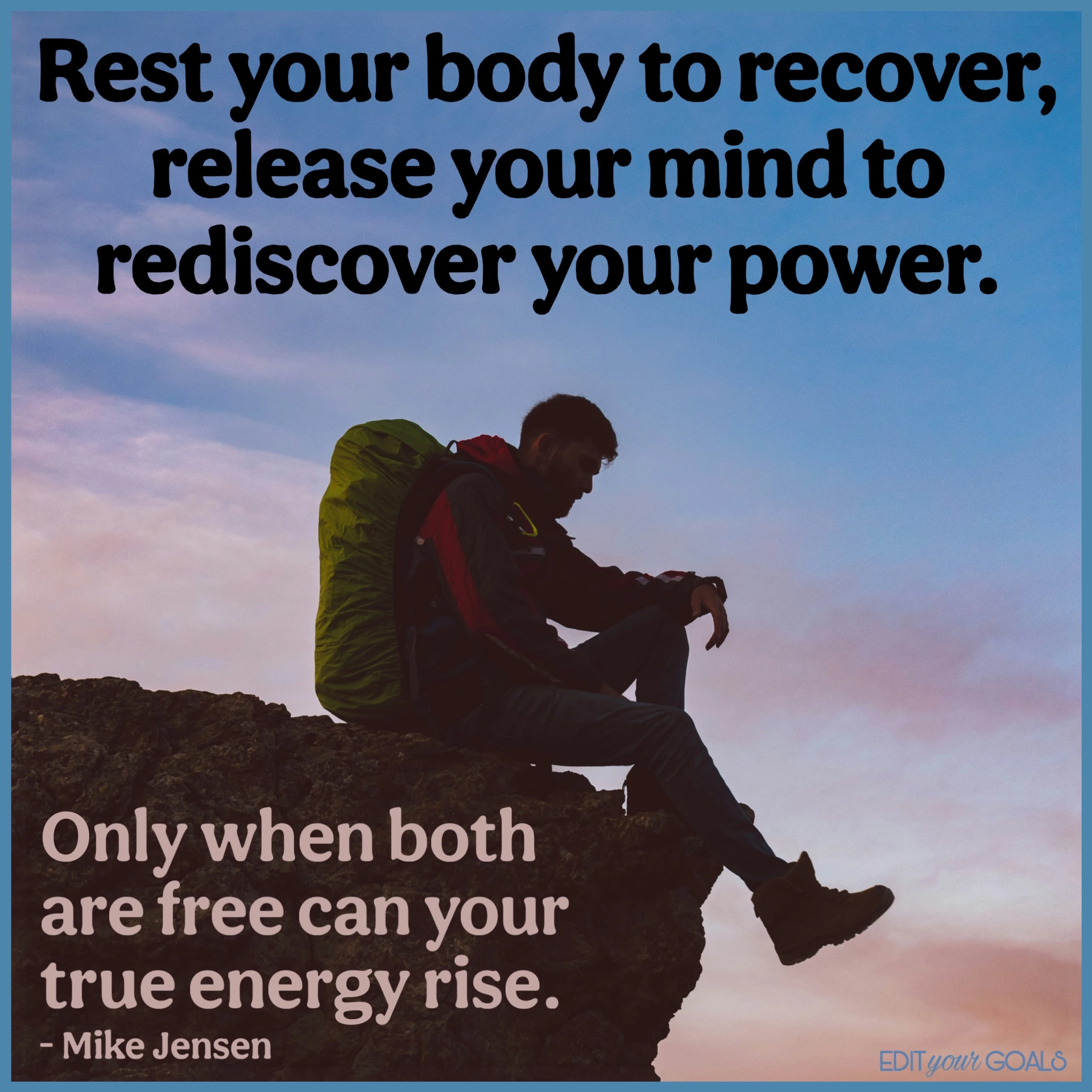
True rejuvenation happens when both body and mind are cared for with awareness. Rest the body. Release the mind. One without the other will always leave you depleted. When you learn to separate the two, you stop mistaking emotional weight for physical fatigue. You begin to move, think, and live with clarity again. That is when energy flows, presence returns, and you begin to rise into your full potential—balanced, powerful, and alive.
If this message spoke to you or something within it resonated, I invite you to check my books. They have already helped thousands worldwide.
https://www.amazon.com/stores/Mike-Jensen/author/B0DKDC7YSZ
– Coach Mike
EDIT Your GOALS
Every
Day
Internal
Thoughts
Guarantee
Our
Absolute
Life
Situations
#mind #body #rejuvenate #different #recovery
Background Photo Credit:
Mohammad Alizade
There are two kinds of tired, but most people never stop to see the difference. When I ask my clients why they feel drained, they almost always answer the same way, they’re just tired. Yet what they really mean is that something inside them is misaligned. Because physical exhaustion and mental exhaustion are not the same. And when we confuse the two, we keep repeating the same pattern without ever restoring our energy.
When the body is tired, it needs rest. Sleep, recovery, stillness. The muscles repair, the system resets, and the body finds balance again. But when the mind is tired, rest alone does nothing. You can sleep ten hours and still wake up exhausted because what drains you isn’t lack of sleep. It’s the weight you carry in your thoughts.
Mental fatigue comes from the invisible load of stress, worry, expectations, and emotional clutter. It’s the result of holding onto things you can’t influence. The more you grip, the heavier it becomes. The solution is not to rest, but to release. Identify what you can influence and take action as soon as possible. For everything else, let it go. Free your energy from what was never yours to carry.
True rejuvenation happens when both body and mind are cared for with awareness. Rest the body. Release the mind. One without the other will always leave you depleted. When you learn to separate the two, you stop mistaking emotional weight for physical fatigue. You begin to move, think, and live with clarity again. That is when energy flows, presence returns, and you begin to rise into your full potential—balanced, powerful, and alive.
If this message spoke to you or something within it resonated, I invite you to check my books. They have already helped thousands worldwide.
https://www.amazon.com/stores/Mike-Jensen/author/B0DKDC7YSZ
– Coach Mike
EDIT Your GOALS
Every
Day
Internal
Thoughts
Guarantee
Our
Absolute
Life
Situations
#mind #body #rejuvenate #different #recovery
Background Photo Credit:
Mohammad Alizade


12
5 reactions
How much energy do you have?
A well-balanced person has an internal reservoir of energy that enables them to pursue their desires without feeling overwhelmed. This energy stems from inner harmony, which, when achieved, unlocks a person’s potential. Unlike trying to force enthusiasm or energy from external factors—such as trying to be the center of attention at a party—true energy is something that flows from within. It can’t be artificially generated or sustained by external circumstances.
When you feel drained from a particular task, it’s a sign that you’ve depleted that specific source of energy. The best approach is to shift to another activity that draws on a different energy reserve. If you’ve been focusing on mental work, take a break and engage in something physical, like a walk or exercise. If social situations feel overwhelming, switch to a calming activity like reading or quiet reflection.
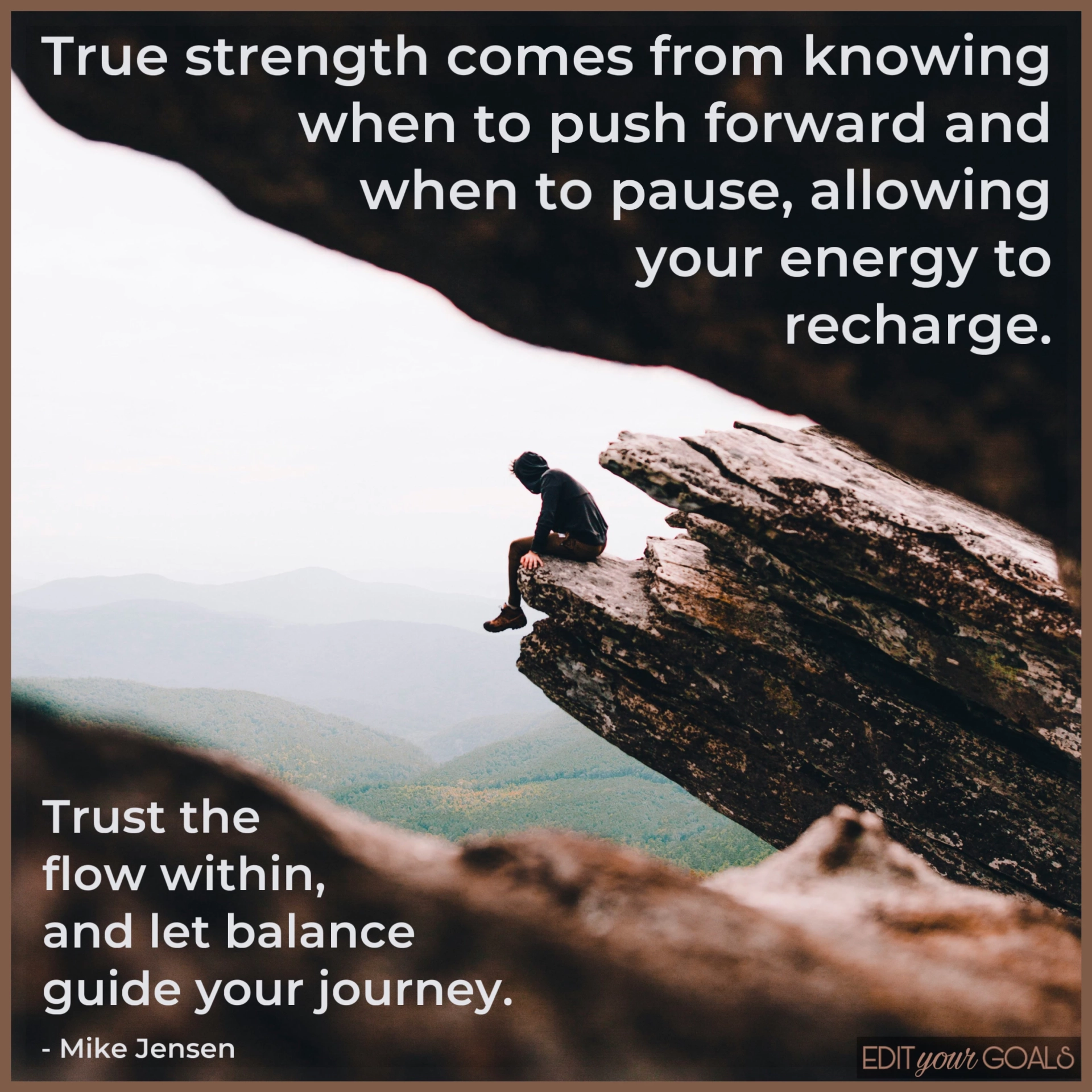
While it’s essential to recognize these shifts in energy and honor them, there are also moments when pushing through low energy is necessary—like during a deadline or urgent responsibility. However, when possible, it’s important to identify these internal signals and allow time for recharging. Forcing yourself to persist through exhaustion on a regular basis can lead to burnout. By understanding the ebb and flow of your internal energy and respecting its need to replenish, you can maintain balance, avoid guilt, and continue pursuing your goals with renewed vitality.
-Coach Mike
EDIT your GOALS
Every
Day
Internal
Thoughts
Guarantees
Our
Absolute
Life
Situations
#energy #internal #rest #life #rejuvenate
Background Picture by
Blake Cheek
A well-balanced person has an internal reservoir of energy that enables them to pursue their desires without feeling overwhelmed. This energy stems from inner harmony, which, when achieved, unlocks a person’s potential. Unlike trying to force enthusiasm or energy from external factors—such as trying to be the center of attention at a party—true energy is something that flows from within. It can’t be artificially generated or sustained by external circumstances.
When you feel drained from a particular task, it’s a sign that you’ve depleted that specific source of energy. The best approach is to shift to another activity that draws on a different energy reserve. If you’ve been focusing on mental work, take a break and engage in something physical, like a walk or exercise. If social situations feel overwhelming, switch to a calming activity like reading or quiet reflection.
While it’s essential to recognize these shifts in energy and honor them, there are also moments when pushing through low energy is necessary—like during a deadline or urgent responsibility. However, when possible, it’s important to identify these internal signals and allow time for recharging. Forcing yourself to persist through exhaustion on a regular basis can lead to burnout. By understanding the ebb and flow of your internal energy and respecting its need to replenish, you can maintain balance, avoid guilt, and continue pursuing your goals with renewed vitality.
-Coach Mike
EDIT your GOALS
Every
Day
Internal
Thoughts
Guarantees
Our
Absolute
Life
Situations
#energy #internal #rest #life #rejuvenate
Background Picture by
Blake Cheek
3

1

1