3 reactions
QuickPad v4.3 is live 💪
https://quickpad.org
🖥️ Clean UI
📄 Open & edit Word (.docx), PDF, & code docs directly
🔄 Chrome App persistence until you burn the note
🚀 Clean canvas start + Guide in settings
⚡ 60% faster launch time
🛡️ 100% free, zero ads, zero trackers
I plan on making video walkthroughs for each project I am working on soon. I hope everyone is having a good week so far!
#privacy #zeroknowledge #notes #quickpad
https://quickpad.org
🖥️ Clean UI
📄 Open & edit Word (.docx), PDF, & code docs directly
🔄 Chrome App persistence until you burn the note
🚀 Clean canvas start + Guide in settings
⚡ 60% faster launch time
🛡️ 100% free, zero ads, zero trackers
I plan on making video walkthroughs for each project I am working on soon. I hope everyone is having a good week so far!
#privacy #zeroknowledge #notes #quickpad


3
1 reactions
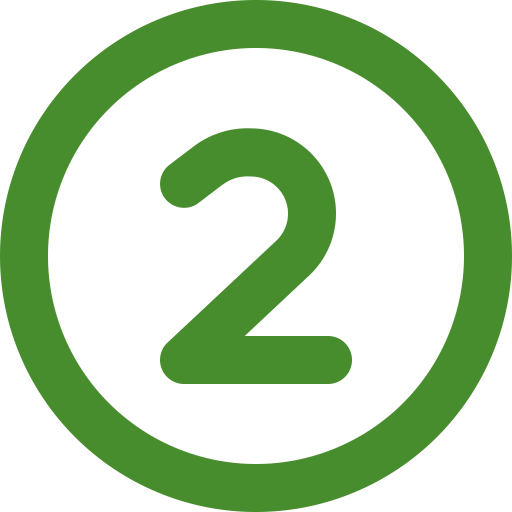
𝐖𝐡𝐨 𝐆𝐞𝐭𝐬 𝐭𝐨 𝐊𝐧𝐨𝐰 𝐖𝐡𝐚𝐭 𝐀𝐛𝐨𝐮𝐭 𝐘𝐨𝐮?
Different people know different things about us, and that’s completely normal. Friends, colleagues, employers, institutions and the services we use all meet us in different contexts. We don’t give every one of them the same access to our lives.
Privacy scholar 𝐇𝐞𝐥𝐞𝐧 𝐍𝐢𝐬𝐬𝐞𝐧𝐛𝐚𝐮𝐦, 𝐩𝐫𝐨𝐟𝐞𝐬𝐬𝐨𝐫 𝐚𝐭 𝐂𝐨𝐫𝐧𝐞𝐥𝐥 𝐓𝐞𝐜𝐡, describes privacy as “𝐚 𝐫𝐢𝐠𝐡𝐭 𝐭𝐨 𝐚𝐩𝐩𝐫𝐨𝐩𝐫𝐢𝐚𝐭𝐞 𝐟𝐥𝐨𝐰 𝐨𝐟 𝐢𝐧𝐟𝐨𝐫𝐦𝐚𝐭𝐢𝐨𝐧.”
Something can be perfectly appropriate to share in one situation and completely out of place in another.
Online, those boundaries are easier to lose.
The same email, phone number, wallet address or persistent identifier can connect activity that happened in completely different parts of your life.
Digital identity now has to solve both aspects of that problem: continuity when we need it, without making everything automatically linkable.
Inside SourceLess, 𝐒𝐓𝐑.𝐃𝐨𝐦𝐚𝐢𝐧 is a human-readable identity recorded on-chain, purchased once and owned for life, and used across connected services. 𝐙𝐊𝟏𝟑 is being developed so that using the same identity doesn’t have to mean revealing the same information every time — ownership or certain attributes can be verified without exposing the information underneath.
𝐎𝐧𝐞 𝐢𝐝𝐞𝐧𝐭𝐢𝐭𝐲 𝐬𝐡𝐨𝐮𝐥𝐝 𝐦𝐚𝐤𝐞 𝐲𝐨𝐮𝐫 𝐝𝐢𝐠𝐢𝐭𝐚𝐥 𝐥𝐢𝐟𝐞 𝐞𝐚𝐬𝐢𝐞𝐫 𝐭𝐨 𝐦𝐚𝐧𝐚𝐠𝐞, 𝐧𝐨𝐭 𝐦𝐚𝐤𝐞 𝐲𝐨𝐮 𝐞𝐚𝐬𝐢𝐞𝐫 𝐭𝐨 𝐦𝐚𝐩.
𝐄𝐱𝐩𝐥𝐨𝐫𝐞 𝐒𝐓𝐑.𝐃𝐨𝐦𝐚𝐢𝐧 at https://www.str.domains .
#SourceLess #STRDomains #DigitalIdentity #Privacy #ZeroKnowledge #DigitalOwnership #Web3
Different people know different things about us, and that’s completely normal. Friends, colleagues, employers, institutions and the services we use all meet us in different contexts. We don’t give every one of them the same access to our lives.
Privacy scholar 𝐇𝐞𝐥𝐞𝐧 𝐍𝐢𝐬𝐬𝐞𝐧𝐛𝐚𝐮𝐦, 𝐩𝐫𝐨𝐟𝐞𝐬𝐬𝐨𝐫 𝐚𝐭 𝐂𝐨𝐫𝐧𝐞𝐥𝐥 𝐓𝐞𝐜𝐡, describes privacy as “𝐚 𝐫𝐢𝐠𝐡𝐭 𝐭𝐨 𝐚𝐩𝐩𝐫𝐨𝐩𝐫𝐢𝐚𝐭𝐞 𝐟𝐥𝐨𝐰 𝐨𝐟 𝐢𝐧𝐟𝐨𝐫𝐦𝐚𝐭𝐢𝐨𝐧.”
Something can be perfectly appropriate to share in one situation and completely out of place in another.
Online, those boundaries are easier to lose.
The same email, phone number, wallet address or persistent identifier can connect activity that happened in completely different parts of your life.
Digital identity now has to solve both aspects of that problem: continuity when we need it, without making everything automatically linkable.
Inside SourceLess, 𝐒𝐓𝐑.𝐃𝐨𝐦𝐚𝐢𝐧 is a human-readable identity recorded on-chain, purchased once and owned for life, and used across connected services. 𝐙𝐊𝟏𝟑 is being developed so that using the same identity doesn’t have to mean revealing the same information every time — ownership or certain attributes can be verified without exposing the information underneath.
𝐎𝐧𝐞 𝐢𝐝𝐞𝐧𝐭𝐢𝐭𝐲 𝐬𝐡𝐨𝐮𝐥𝐝 𝐦𝐚𝐤𝐞 𝐲𝐨𝐮𝐫 𝐝𝐢𝐠𝐢𝐭𝐚𝐥 𝐥𝐢𝐟𝐞 𝐞𝐚𝐬𝐢𝐞𝐫 𝐭𝐨 𝐦𝐚𝐧𝐚𝐠𝐞, 𝐧𝐨𝐭 𝐦𝐚𝐤𝐞 𝐲𝐨𝐮 𝐞𝐚𝐬𝐢𝐞𝐫 𝐭𝐨 𝐦𝐚𝐩.
𝐄𝐱𝐩𝐥𝐨𝐫𝐞 𝐒𝐓𝐑.𝐃𝐨𝐦𝐚𝐢𝐧 at https://www.str.domains .
#SourceLess #STRDomains #DigitalIdentity #Privacy #ZeroKnowledge #DigitalOwnership #Web3
1
0 reactions
𝐖𝐡𝐚𝐭 𝐒𝐮𝐫𝐯𝐞𝐢𝐥𝐥𝐚𝐧𝐜𝐞 𝐃𝐨𝐞𝐬 𝐭𝐨 𝐚 𝐂𝐨𝐧𝐯𝐞𝐫𝐬𝐚𝐭𝐢𝐨𝐧
Privacy changes how we speak.
We say things privately that we’re still trying to figure out ourselves. We ask questions we wouldn’t ask publicly.
Research on digital surveillance has found that simply 𝐟𝐞𝐞𝐥𝐢𝐧𝐠 𝐰𝐚𝐭𝐜𝐡𝐞𝐝 𝐜𝐚𝐧 𝐜𝐡𝐚𝐧𝐠𝐞 𝐡𝐨𝐰 𝐩𝐞𝐨𝐩𝐥𝐞 𝐜𝐨𝐦𝐦𝐮𝐧𝐢𝐜𝐚𝐭𝐞. Researchers call it a chilling effect: people hold back, avoid certain subjects or censor themselves.
Private messaging affects more than data security. It affects how freely people speak.
Europe is dealing with exactly that dilemma now: 𝐡𝐨𝐰 𝐭𝐨 𝐩𝐫𝐨𝐭𝐞𝐜𝐭 𝐜𝐡𝐢𝐥𝐝𝐫𝐞𝐧 𝐟𝐫𝐨𝐦 𝐚𝐛𝐮𝐬𝐞 𝐨𝐧𝐥𝐢𝐧𝐞 𝐰𝐢𝐭𝐡𝐨𝐮𝐭 𝐬𝐮𝐛𝐣𝐞𝐜𝐭𝐢𝐧𝐠 𝐩𝐫𝐢𝐯𝐚𝐭𝐞 𝐜𝐨𝐦𝐦𝐮𝐧𝐢𝐜𝐚𝐭𝐢𝐨𝐧 𝐭𝐨 𝐛𝐫𝐨𝐚𝐝 𝐬𝐜𝐚𝐧𝐧𝐢𝐧𝐠.
In 𝐒𝐭𝐫𝐓𝐚𝐥𝐤, conversation content isn’t kept in a permanent central archive. On the web, encryption keys are generated locally, your private key stays with you, and 𝐒𝐓𝐑.𝐃𝐨𝐦𝐚𝐢𝐧 access means you don’t need a phone number or email to use the service.
𝐖𝐞 𝐧𝐞𝐞𝐝 𝐭𝐨 𝐛𝐞 𝐚𝐛𝐥𝐞 𝐭𝐨 𝐬𝐩𝐞𝐚𝐤 𝐟𝐫𝐞𝐞𝐥𝐲 𝐰𝐢𝐭𝐡𝐨𝐮𝐭 𝐭𝐮𝐫𝐧𝐢𝐧𝐠 𝐞𝐯𝐞𝐫𝐲 𝐜𝐨𝐧𝐯𝐞𝐫𝐬𝐚𝐭𝐢𝐨𝐧 𝐢𝐧𝐭𝐨 𝐚 𝐩𝐞𝐫𝐦𝐚𝐧𝐞𝐧𝐭 𝐫𝐞𝐜𝐨𝐫𝐝.
#StrTalk #SourceLess #Privacy #DigitalPrivacy #Encryption #PrivateCommunication #DigitalRights
Privacy changes how we speak.
We say things privately that we’re still trying to figure out ourselves. We ask questions we wouldn’t ask publicly.
Research on digital surveillance has found that simply 𝐟𝐞𝐞𝐥𝐢𝐧𝐠 𝐰𝐚𝐭𝐜𝐡𝐞𝐝 𝐜𝐚𝐧 𝐜𝐡𝐚𝐧𝐠𝐞 𝐡𝐨𝐰 𝐩𝐞𝐨𝐩𝐥𝐞 𝐜𝐨𝐦𝐦𝐮𝐧𝐢𝐜𝐚𝐭𝐞. Researchers call it a chilling effect: people hold back, avoid certain subjects or censor themselves.
Private messaging affects more than data security. It affects how freely people speak.
Europe is dealing with exactly that dilemma now: 𝐡𝐨𝐰 𝐭𝐨 𝐩𝐫𝐨𝐭𝐞𝐜𝐭 𝐜𝐡𝐢𝐥𝐝𝐫𝐞𝐧 𝐟𝐫𝐨𝐦 𝐚𝐛𝐮𝐬𝐞 𝐨𝐧𝐥𝐢𝐧𝐞 𝐰𝐢𝐭𝐡𝐨𝐮𝐭 𝐬𝐮𝐛𝐣𝐞𝐜𝐭𝐢𝐧𝐠 𝐩𝐫𝐢𝐯𝐚𝐭𝐞 𝐜𝐨𝐦𝐦𝐮𝐧𝐢𝐜𝐚𝐭𝐢𝐨𝐧 𝐭𝐨 𝐛𝐫𝐨𝐚𝐝 𝐬𝐜𝐚𝐧𝐧𝐢𝐧𝐠.
In 𝐒𝐭𝐫𝐓𝐚𝐥𝐤, conversation content isn’t kept in a permanent central archive. On the web, encryption keys are generated locally, your private key stays with you, and 𝐒𝐓𝐑.𝐃𝐨𝐦𝐚𝐢𝐧 access means you don’t need a phone number or email to use the service.
𝐖𝐞 𝐧𝐞𝐞𝐝 𝐭𝐨 𝐛𝐞 𝐚𝐛𝐥𝐞 𝐭𝐨 𝐬𝐩𝐞𝐚𝐤 𝐟𝐫𝐞𝐞𝐥𝐲 𝐰𝐢𝐭𝐡𝐨𝐮𝐭 𝐭𝐮𝐫𝐧𝐢𝐧𝐠 𝐞𝐯𝐞𝐫𝐲 𝐜𝐨𝐧𝐯𝐞𝐫𝐬𝐚𝐭𝐢𝐨𝐧 𝐢𝐧𝐭𝐨 𝐚 𝐩𝐞𝐫𝐦𝐚𝐧𝐞𝐧𝐭 𝐫𝐞𝐜𝐨𝐫𝐝.
#StrTalk #SourceLess #Privacy #DigitalPrivacy #Encryption #PrivateCommunication #DigitalRights